
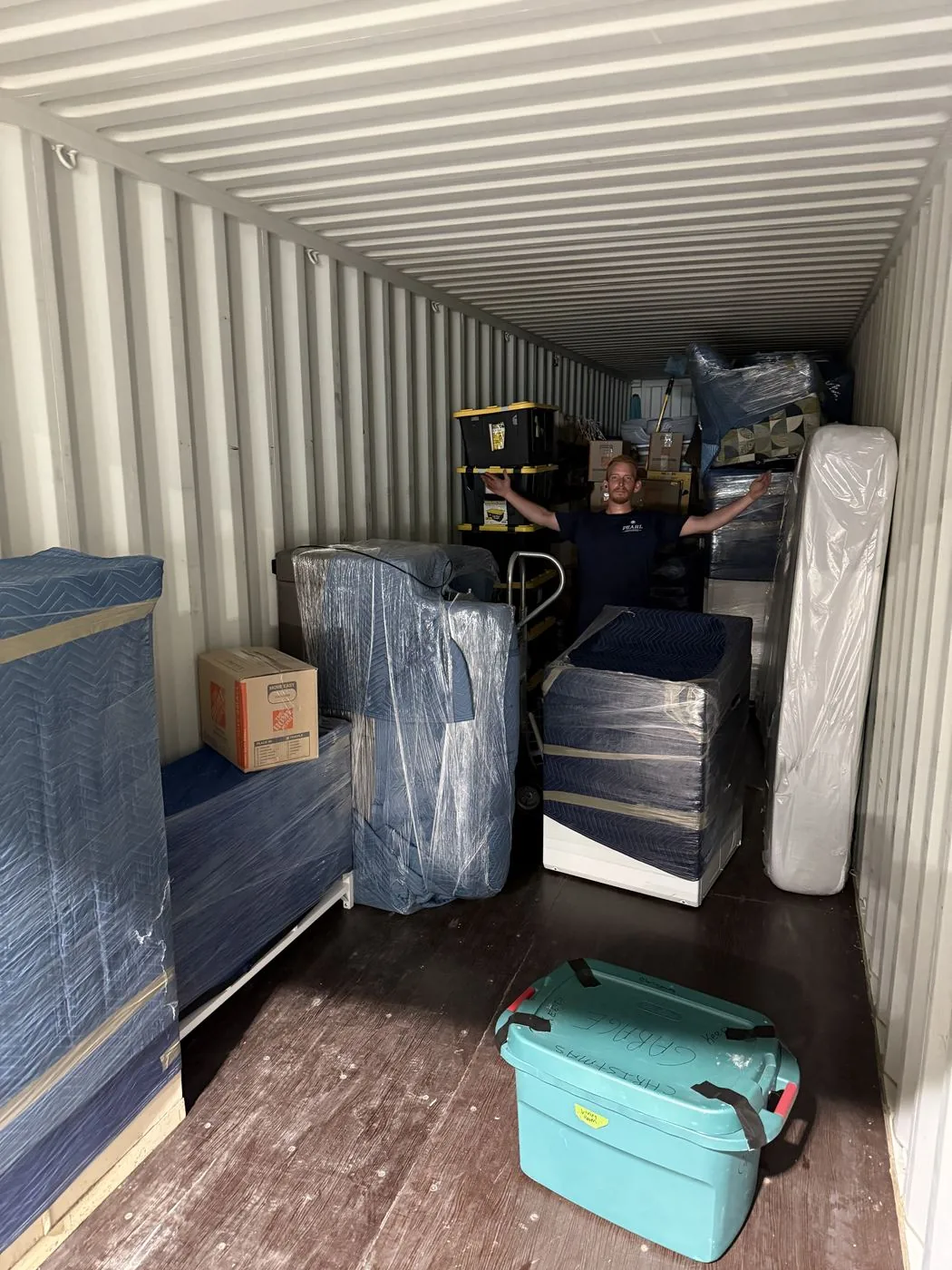
Why the inventory sets the estimate
A local move is billed by time, and time comes from two things: how much there is to handle and how hard it is to get from the door to the truck. The quote-factors guide covers the second half, the stairs and long carries and elevators. This guide is the first half. An estimator who knows the access perfectly and the inventory vaguely is still guessing.
The guess usually runs short. People remember the sofa and forget the two bookcases behind it. They count bedrooms and skip the hall closet with the vacuum, the ironing board, and the folding table. On move day the crew finds all of it, and the day runs longer than the number on the estimate. Nobody enjoys that conversation, and it is avoidable.
The fix is not more effort. It is a different method: count from the rooms instead of from memory, and separate furniture from boxes.
Furniture first, then boxes
Start with furniture because furniture decides the truck. A sectional, a king bed, a dining table with eight chairs, a dresser, two nightstands, a desk, three bookcases: that list tells an estimator roughly how many cubic feet the load needs and how many people should be carrying it. Boxes matter, but a hundred boxes stack; a sectional does not.
Walk each room and name every piece out loud into your phone, or type it as you go. Be specific about size where size changes handling. A queen bed and a king bed are different carries. A glass-top table is different from a wood one. A dresser with the drawers full is different from an empty one, and the crew will want to know which it is.
Flag three things per piece if they apply: does it come apart, is it unusually heavy, and does it need to go somewhere specific at the new address. The disassembly guide explains why the first question changes the timeline. The second covers items like a solid-wood armoire or a treadmill. The third prevents the crew from parking a bed frame in the wrong room and moving it twice.
Then do boxes as a separate pass. A room with no furniture worth mentioning can still hold thirty boxes of books, and the estimator needs both counts.
The spaces everyone forgets
Four spaces are missing from almost every inventory sent from memory, and together they are often the difference between the estimate and the actual day.
The garage comes first. Bikes, tools, a chest freezer, shelving, camping gear, the boxes that never got unpacked from the last move. The garage and workshop guide covers how to sort it, but for inventory purposes just walk in, look at every wall, and count what is going.
The basement is second, and in Portland's older housing it is often the bigger surprise. Older basements hold furniture that went down twenty years ago and has not moved since, and the stairs it came down are usually the tightest route in the house. The basement prep guide covers the stairs; for the list, count what is down there and note that it is down there.
The attic and crawl space are third. Holiday decorations, luggage, the crib being saved for someone. If it has a hatch and a ladder, say so.
Outdoors is fourth. Patio furniture, a grill, planters, a garden bench, the kids' play structure. Some of it will not go, and some of it will. Decide now rather than while the truck is being loaded.

Counting boxes before you have packed
Most people request an estimate before they have packed a single box, so the box count is a forecast. That is fine, as long as it is a forecast built from the rooms rather than a round number.
Go room by room and ask what will be in boxes when the room is empty. A kitchen fills more boxes than any other room of its size; the kitchen packing guide gives a sense of how many. Books are dense and go in small boxes, so a wall of shelves becomes a stack of small, heavy cartons rather than a few large ones. Closets are light but bulky. Bathrooms and hallways add a handful each.
Write the forecast per room, then add the count up. When you finish packing, if the real number is well off from the forecast, tell the mover before move day. A revised count a week out is easy to plan for. The same news on the morning of the move is not.
If packing is part of the job rather than something you are doing yourself, say so in the request. The packing services page explains what that changes, and the inventory becomes even more important, because the crew needs to know what is going into boxes as well as how many boxes there will be.
How to send the inventory
A plain list is enough. Room name, then the furniture in that room, then the forecast box count. Add a line at the end for the garage, basement, attic, and outdoor items, and a separate line for anything not moving.
Attach photos of the largest and heaviest pieces, and one photo of any room where the volume is hard to describe, like a packed home office or a craft room. Photos settle the size questions faster than any adjective can. Then add both addresses and the date, and send the access details covered in the access audit alongside it: stairs, parking, elevators, the carry from the door to where the truck can stand.
When the estimate arrives, read it against your own list. The estimate guide explains the line items. If the estimate reflects a smaller inventory than you sent, ask why before you book. If it reflects a larger one, ask what was assumed. Either way, the inventory is the document both sides are working from, and it is worth the hour it takes to build well.
A 7-item inventory checklist
- Walk every room and list the furniture piece by piece, with sizes where size changes the carry.
- Flag each piece that comes apart, is unusually heavy, or has a specific destination room.
- Forecast the box count per room, kitchen and bookshelves first, and add it up.
- Inventory the garage, basement, attic or crawl space, and everything outdoors.
- Write a separate line for anything that is not moving, so nobody has to ask on the day.
- Photograph the largest pieces and any room that is hard to describe.
- Send the list, the photos, both addresses, the date, and the access details together, and update the box count once packing is done.
Where Pearl Movers fits
Send the inventory, get an estimate that holds
Pearl Movers builds local estimates from the inventory and the access at both addresses. A room-by-room list with photos of the big pieces gives the crew the right truck and the right headcount, which is what keeps the billed hours close to the estimate on move day.
See how local moving works, add packing if you want the boxes handled too, or request a quote with the inventory attached.
Common questions
Moving inventory FAQs
Do I need to list every box for a moving estimate?
No. A forecast per room is enough before packing, and a corrected total once packing is done. Furniture needs to be listed piece by piece, because furniture sets the truck size and the crew size. Boxes mostly set the hours.
What if I have not decided what I am taking?
List everything that might go and mark the undecided items. An estimate built on the larger list can only come down. Decide before move day, and tell the mover, so the crew and the truck match the final version.
Should the inventory include items in the garage and basement?
Yes, and they are the items most often left off. Garages, basements, attics, and outdoor spaces hold more volume than most people expect, and the basement usually has the tightest stairs in the house. Count them and say where they are.
How much does the inventory change a moving quote?
It is the foundation of the quote. Access details like stairs and long carries adjust the time, but the inventory decides how much there is to handle in the first place. A list that misses a room can leave the estimate well short of the real job.
Planning references
Official and authoritative sources used
Permit, parking, construction, and access rules can change. Confirm current requirements with the responsible city, county, property manager, association, or service provider before move day.