
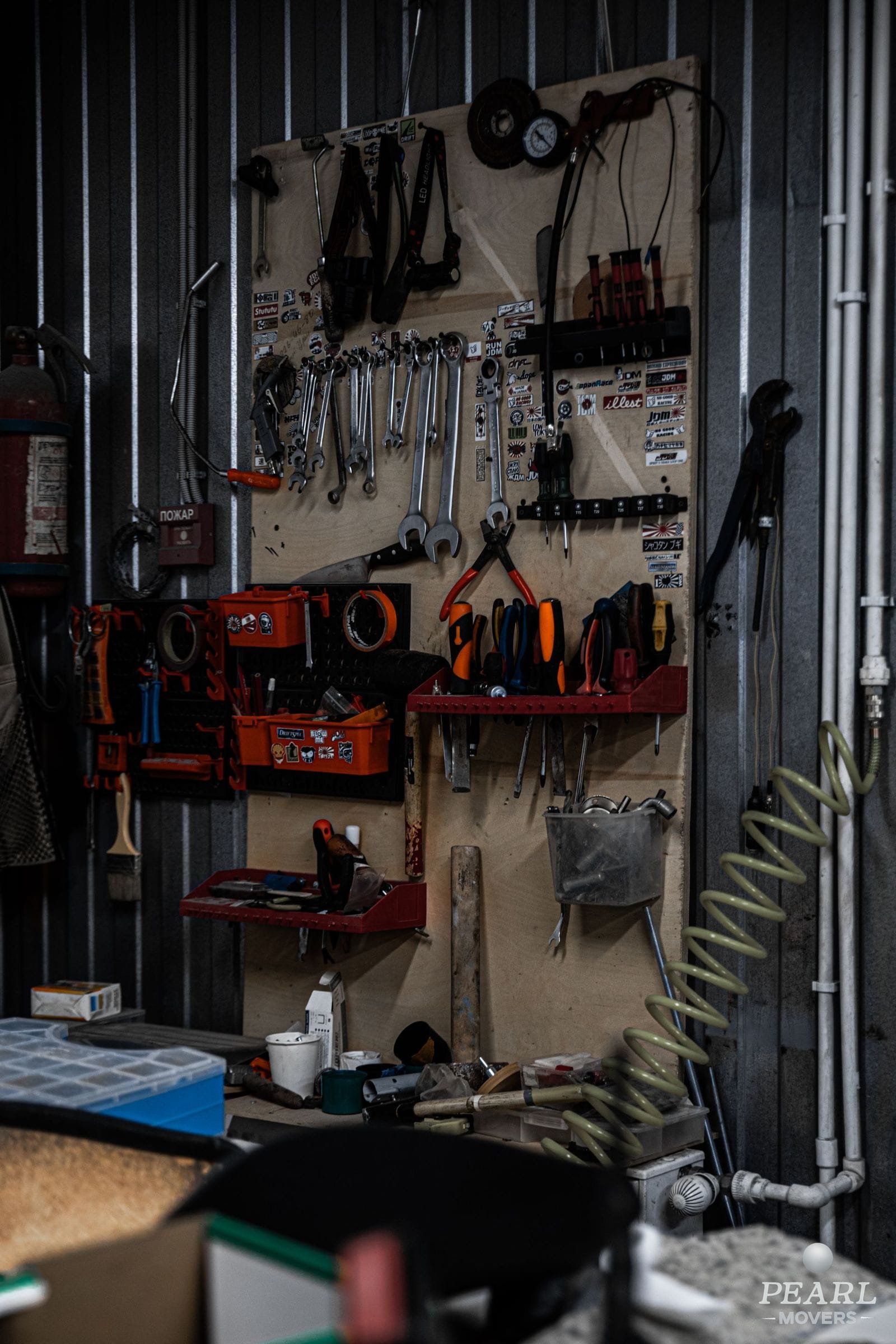
Why the garage wrecks more estimates than any other room
A bedroom is legible. Anyone can look at it and guess the boxes. A garage is not: shelving hides depth, rafters hide storage, and the weight per cubic foot runs far beyond anything in the house. A single rolling tool chest can outweigh a sofa. Two jobs that look identical on a room count can differ by hours once the garage doors open.
That opacity cuts both ways on move day. When a crew discovers an unmentioned compressor, a loaded chest, and forty unsorted bins, the schedule absorbs it in real time. When those items were listed in advance, the truck, the crew size, and the loading order already account for them. The garage rewards preparation more than any other room because it starts from the least information.
It is also the room most likely to hold things that cannot be moved at all, which is where the sort begins.
Sort first, pack second
Give the garage its own decluttering pass before any packing supplies appear, and give it more calendar than you think it needs. Three to four weeks out is realistic for a full workshop. The declutter before moving checklist covers the general method; the garage version has a few extra edges.
Work in zones, one wall or bench at a time, and force each item into a decision:
- Moving. It earns space on the truck. Into the inventory it goes.
- Selling or giving away. Duplicate tools, outgrown sports gear, and lumber offcuts move fast on local marketplaces, and buyers who haul away heavy items are doing you a favor twice.
- Hazardous. Fuel, chemicals, and pressurized tanks go to a staging corner for separate handling. Never back on the shelf.
- Trash. The broken and the unidentifiable. A garage that has not been sorted in years produces more of this pile than anyone expects.
Households heading to a smaller home should treat the garage as the first and largest downsizing decision; the downsizing playbook covers how to make those calls without three trips through the same pile. Half-finished projects deserve honesty here too. A project that has not moved in two years is materials, and materials can be rebought closer to the day they are needed.
The hazardous layer: fuel, propane, and chemicals
Every garage holds a layer of items that no moving company can carry, no matter how carefully they are packed. Gasoline and gas cans, even empty ones that smell of fuel. Propane tanks. Paint thinner, solvents, and many finishes. Pool and garden chemicals. Pesticides and fertilizers. Charcoal lighter fluid. The list is longer than most people guess, and the what movers won't move guide walks through the whole of it with the disposal options for each category.
For the garage specifically, three habits cover most of it:
- Run equipment dry. Mowers, trimmers, blowers, chainsaws, and generators should burn off their fuel over the last few weeks of ordinary use. Draining is the fallback for whatever is still wet the week of the move.
- Deal with tanks separately. A grill can ride the truck; its propane tank cannot. Exchange it, give it to a neighbor, or transport it yourself upright, windows open, on a short trip.
- Book a hazardous waste run. Metro's household hazardous waste facilities serve the Portland area for the paint, chemicals, and mystery cans. Do this a week or two out, not the night before.
The reason for the rule is worth stating plainly: a moving truck is an enclosed box that rides for hours, sometimes in heat, and flammables inside it endanger the crew and everything else on board. Federal guidance for households at FMCSA's Protect Your Move encourages settling exactly this kind of scope question with a mover in writing before the day, and the hazardous list is the first scope question a garage raises.
Packing tools and equipment
Once the sort is done, garage packing is mostly a weight problem. Steel is dense, and the natural instinct to fill a large box with tools produces a box nobody can lift safely. Use small boxes for dense items and stop filling when the box is heavy, not when it is full. Top off with rags or gloves rather than more metal.
Beyond weight, a few specifics:
- Power tools travel best in their original cases. Caseless tools get wrapped individually and boxed. Remove bits and blades first.
- Batteries pack separately from their tools, terminals taped or bagged, and it is worth asking the moving company how they prefer lithium batteries handled before the day.
- Hand tools can stay in a small box that latches. Loose wrenches and sockets go into labeled zip bags before they go into boxes, or they arrive as one anonymous pile.
- Blades, chisels, and anything edged get sheathed in cardboard and taped before wrapping, for the sake of whoever opens the box.
- Cords, hoses, and chains coil and tie individually. A box of tangled cords costs more time at the destination than it saved at the origin.
- Garden tools with long handles bundle in twos and threes with tape or stretch wrap, heads together and padded.
Label every box with its zone: bench, wall, rafters, garden. The labels turn unloading into reassembly instead of archaeology.
Benches, shelving, and the big pieces
The large items need decisions more than packing. A workbench may unbolt from the wall or may be built into it; freestanding shelving usually moves better empty and disassembled; a rolling tool chest must be emptied, its drawers locked or taped, before anyone tries to move it. Drawers of steel make a chest dangerously heavy and unstable, and this is the single most common garage surprise on move day.
Stationary machines, table saws, band saws, drill presses, and compressors, deserve a line each in your quote request with rough dimensions and any fixed wiring noted. As with household appliances, a machine hard-wired into a circuit needs an electrician to disconnect it before the move; crews handle the carrying, not the electrical work, as a general industry practice. Lower blades, remove or secure fences and loose tables, and strap moving parts before the day.
If a piece is coming off a wall, decide who does the unbolting. Some companies will disassemble; many expect wall-mounted items to be down and free-standing at arrival. Ask when you book rather than discovering the answer at eight in the morning.
Garage and workshop checklist
- Three to four weeks out: sort the garage into moving, selling, hazardous, and trash, one zone at a time.
- Start running mowers, trimmers, and other gas equipment dry during normal use.
- Book a household hazardous waste drop-off for fuels, chemicals, and old paint, and rehome propane tanks.
- Photograph and list every large item, with dimensions, for the quote request.
- Empty tool chests into labeled boxes, and pack dense tools in small boxes with the weight kept liftable.
- Case or wrap power tools, pack batteries separately, and sheath every edged tool.
- Arrange the electrician for any hard-wired machine, and confirm with the mover who disassembles wall-mounted pieces.
Build the inventory that fixes the quote
The last hour of garage prep is paperwork, and it pays better than any hour of packing. Walk the sorted garage with a phone: wide photos of each wall and zone, close-ups of the big pieces, and a short list with rough sizes. A quote built from that record reflects the real job, which protects both sides of it. Oregon's regulator publishes general guidance for households hiring movers on the ODOT household goods moving page, and the Oregon DOJ's consumer protection office is the place to check before hiring any company for a large job.
A garage that has been sorted, drained, and photographed stops being the room that wrecks the estimate. It becomes the easiest room on the truck: dense, boxed, labeled, and already decided.
Where Pearl Movers fits
Send the garage inventory with the quote request
When you request a Portland-area quote, include the garage photos and the list of large items alongside the household inventory, and flag anything hard-wired, wall-mounted, or unusually heavy. Pearl Movers can review the request with the workshop in full view and tell you what condition each piece needs to be in when the crew arrives. Ask directly about disassembly, batteries, and any item you are unsure belongs on the truck.
Review local moving information or request a quote with your garage inventory attached.
Common questions
Garage and workshop moving FAQs
Will movers move my tools and workshop equipment?
As a general practice, moving crews move tools and equipment that are packed and safe to carry: boxed hand tools, cased power tools, benches, and shelving. Hazardous materials are the exception. Fuel, propane, solvents, and similar items stay off the truck regardless of packing, so confirm the item list with the company when you book.
Can movers take a lawn mower or a gas grill?
Usually yes, once the fuel is gone. Gas-powered equipment generally needs to be drained or run dry before loading, and a grill's propane tank cannot go on the truck at all. Plan to run equipment dry in the weeks before the move and to transport or dispose of tanks separately.
How should I pack power tools for a move?
Original cases are best where they survive. Otherwise wrap each tool, box it with the weight kept manageable, and pack batteries separately from the tools with terminals protected. Coil cords and hoses, tape or bag loose accessories, and label every box by bench or wall zone so the shop reassembles in the right order.
Should I empty my toolbox or tool chest before moving?
Small portable boxes can travel loaded if they latch securely. A rolling tool chest is different: drawers full of steel make it dangerously heavy and the drawers can fly open in transit. Empty the drawers into labeled boxes, lock or tape the chest shut, and tell the moving company its size so the crew brings the right equipment.
Local planning references
Official and authoritative sources used
Hazardous material rules, disposal options, and company policies vary and can change. Confirm the item list with the moving company and current disposal guidance with the responsible agency before move day.