
Inventory is the foundation of every quote
Every estimate starts with a picture of how much is moving. The problem is that most people describe their home by its room count, and room counts leave a lot out.
A two-bedroom is not a fixed quantity. One two-bedroom holds a minimalist household that fits in half a truck. Another holds the same bedrooms plus a garage packed to the rafters, an attic of holiday decor, a shed of yard equipment, and a storage unit across town that nobody mentioned. Both count as two-bedrooms on a quote request, yet as moves they have almost nothing in common.
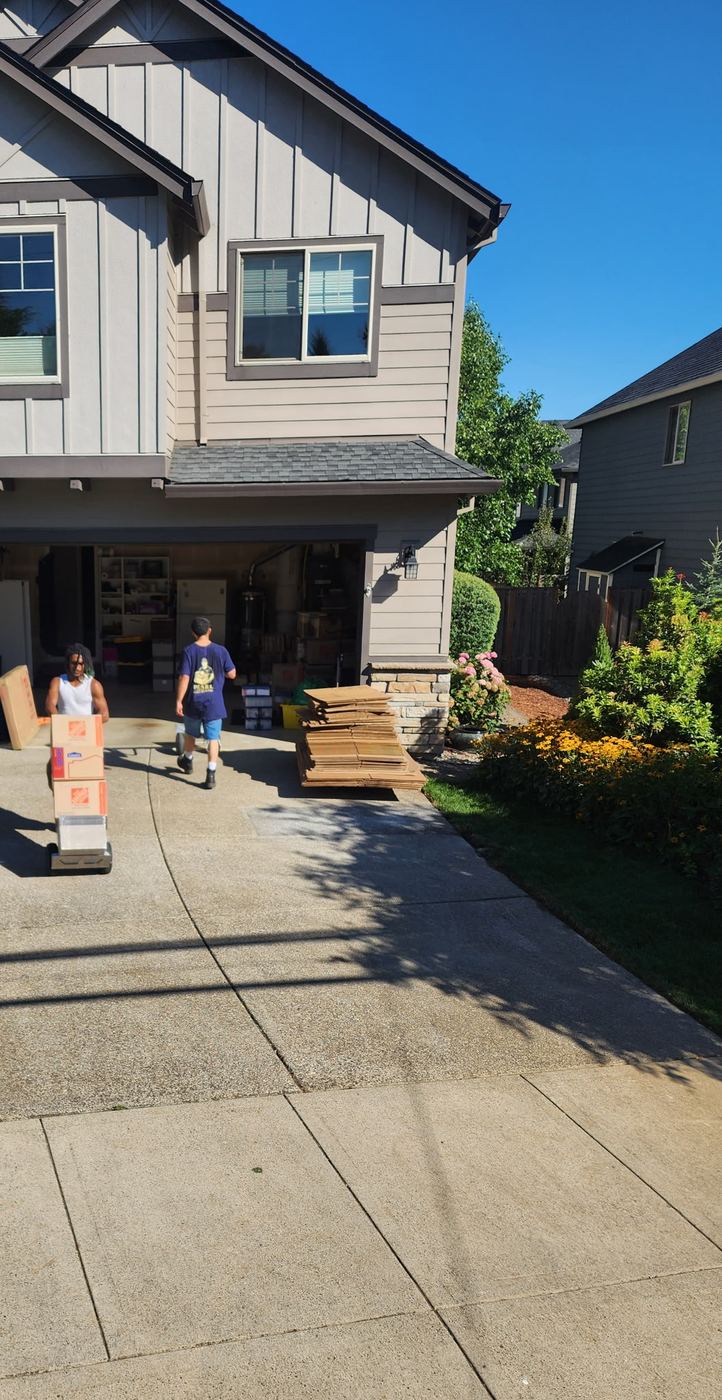
The spaces that most often go undescribed are the ones nobody walks through daily: garages, attics, crawl spaces, basements, sheds, and offsite storage. Portland homes are good at hiding volume: an older Northeast bungalow with a full basement can carry more than its main floor suggests, and a suburban garage in Beaverton or Happy Valley routinely holds a second household's worth of boxes.
Extra inventory changes the crew size, the loading plan, and sometimes the truck itself. A stated two-bedroom and an actual two-bedroom with a packed garage can be the difference between one trip and two. Walk every space before you describe the move, and count the storage unit as part of the home.
Access at the origin: where crew time is won or lost
A local move is priced largely on crew time, and the same furniture takes very different amounts of work to load depending on what sits between it and the truck.
The origin access conditions that change a quote:
- Interior stairs. Every flight slows every trip. A staircase narrow enough that two carriers cannot pass each other slows it further.
- Exterior steps and split-level entries. Ten concrete steps from the door to the driveway count just as much as a flight inside.
- Elevators. Size, padding requirements, and whether the building lets you reserve it. An unreserved elevator shared with residents can double the time a load takes.
- Long carries. The walking distance from where the truck stands to the front door. Fifty extra feet, repeated over an entire household, is real labor.
- Driveways. Narrow, steep, or gravel driveways can keep the truck at the street even when a driveway exists on paper.
- Gates, controlled entries, and shared courtyards that force a detour on every trip.
None of these conditions trouble a crew that knows about them in advance. They turn into problems when the quote assumed they did not exist, because every one of them adds crew time.
Access at the destination is easy to forget
People document the home they are leaving and give the destination a street address and optimism, which gets it backwards. The destination is where the heaviest work happens, since everything goes up and in rather than down and out.
Run the same access list at the new address. Stairs inside and out, elevator size and reservation, carry distance, driveway, gates. Then add one more question the origin never asks: where is each large piece going? A dresser headed for the garage takes far less time than the same dresser going up to a third-floor bedroom around a landing turn. If the sofa is destined for a basement family room, say so.
Portland adds a few of its own destination surprises. In the West Hills, grades put front doors a full story above or below the street, with staircases doing the connecting. Historic homes in neighborhoods like Irvington or Ladd's Addition were built with staircases and door frames sized for another century, and some large modern furniture simply does not make the turn. Downtown and Pearl District towers bring dock rules, certificate requirements, elevator reservations, and strict loading windows that the building enforces whether or not the quote accounted for them.
If you cannot visit the destination before requesting the quote, ask the seller, landlord, or building manager for photos and the building's move-in rules. That email takes five minutes and can settle questions that would otherwise wait until move day.
Parking position and permits
Where the truck can legally stand decides the carry distance, and the carry distance is priced into the quote. Loading from a legal spot around the corner takes noticeably longer than loading from the curb directly in front of the door.
On many streets this resolves itself. Dense Portland blocks are less forgiving: if the origin or destination depends on street parking that is usually full, on metered space, or on a permit zone, reserved curb space may be worth arranging. Portland handles this through the Portland Bureau of Transportation's Temporary Street Use Permitting program, and it needs lead time: the process involves application review and advance sign requirements, so it is not something to start the week of the move.
Tell the estimator where you expect the truck to stand and what the parking situation on the block actually looks like during the day. If a reservation is pending, say pending. The full process, including who posts signs and how long the city needs, is covered in the Portland moving truck parking permit guide.
Scope decisions that move the number
Inventory and access describe the move. Scope is what you are hiring the mover to do with it, and those decisions shift the quote as much as anything physical does.
The scope choices worth settling before the quote:
- Packing. A full-service pack, where the crew boxes everything, is a different job from loading boxes you packed yourself. Partial packing, such as the kitchen only, sits in between. The options are laid out on the packing services page.
- Disassembly and reassembly. Beds, cribs, exercise equipment, and large desks take tools and time at both ends.
- Materials. Boxes, paper, tape, and mattress bags are part of the job when the mover supplies them.
- Storage in transit. A gap between move-out and move-in means loading, storing, and loading again. See storage solutions for how that works.
- Dates and flexibility. A fixed Saturday at month end is the tightest ask in the calendar. Flexibility on the date or start time gives the scheduler room to work with you.
- Specialty items that need advance planning. Safes, oversized furniture, and unusually heavy or awkward pieces need the right equipment and crew, arranged before move day rather than discovered on it. The specialty logistics page covers how to flag these.
The thread running through all of these is disclosure. A mover who hears about the treadmill in the basement during the estimate plans for it; one who hears about it on move day has to replan the whole afternoon. Oregon regulates household goods movers at the state level, and ODOT's consumer guidance on how estimates work is worth a read before you sign anything.
How to document your move so the quote holds
All of this comes down to showing the estimator the real move, and documentation is how you do that without hosting a site visit.
The photo list, for both addresses:
- Every room, with closet doors open.
- The garage, attic, basement, crawl space, shed, and any storage unit, even (or especially) when you think they are nearly empty.
- The building entrance and the path from it to the parking area.
- Every staircase, interior and exterior, shot from the bottom.
- The elevator interior with the door open, if there is one.
- The driveway and the curb where you expect the truck to stand.
- Your largest and heaviest pieces, individually.
A short video walkthrough does the same work faster: walk the home narrating what stays and what goes, then walk the exit path to the street. Most people understate their own volume when describing it from memory, and the video shows the estimator what is actually there.
Add a written inventory of large items and measure anything you suspect is tight: the sofa, the armoire, the narrowest doorway, the staircase turn. For a room-by-room method, the Portland home moving access audit walks the entire exercise in order.
The seven-item disclosure checklist
Before you request a quote, confirm you can hand the mover these seven things. Together they give the estimator everything the quote is built from.
- Both full addresses, not just the origin.
- A complete inventory, including garage, attic, basement, shed, and storage unit contents.
- Photos or video of every room and every storage space at the origin.
- Photos and access notes for the destination: stairs, elevator, parking, and building rules.
- Where the truck can stand at each address, and the status of any parking reservation.
- Your packing decision: full pack, partial pack, or self-packed, plus any disassembly needs.
- A list of specialty items and anything you are still undecided about, labeled as undecided.
Hand over all seven and the estimate is built on the move you are actually making, with nothing left for the crew to find out on move day.
Where Pearl Movers fits
Send the whole picture up front
Pearl Movers quotes from the information the customer provides. Send both addresses, the preferred date, the full inventory, and access photos of both properties, and the quote reflects the real home rather than a guess built from a room count. Anything undecided or unusual should be in the request, labeled as such, so the plan accounts for it before the crew arrives.
Review local moving information or request a quote with the photos and inventory attached.
Common questions
Moving quote FAQs
Why did my moving quote change on move day?
Usually because the move differed in some way from how it was described. The common causes are extra inventory the estimator never saw, access conditions that were not mentioned, or a truck that could not stand where the plan assumed. A quote is built from the description it was given, and when that description was complete, the quote rarely needs to change.
Do stairs really make a move cost more?
Yes. Stairs slow every single trip between the home and the truck, and a local move is priced largely on crew time. One flight repeated across an entire household adds up, and so do exterior steps, split-level entries, and staircases too narrow for two carriers. Mention every flight at both addresses when requesting the quote.
What should I photograph before asking for a quote?
Every room with closets open, plus the garage, attic, shed, crawl space, and any storage unit. Then the access: the building entrance, every staircase, the elevator interior, the driveway, and the curb or lot where the truck would stand. Finish with your largest and heaviest pieces. Photos of both addresses answer most of the questions an estimator would otherwise have to guess at.
Should I tell movers about items I might not bring?
Yes, and label them as undecided. An estimator can note the item and explain how the plan changes with or without it. Deciding to leave something behind rarely causes a problem; adding a large item on move day changes the load plan, the crew time, and sometimes the truck. An item the estimator knows about, even tentatively, is far easier to handle than one the crew discovers on move day.
Is a video walkthrough better than a phone estimate?
Usually. A phone estimate depends on a room count and your own description of volume, which most people understate. A video walkthrough or in-person survey lets the estimator see the actual furniture, the packed closets, and the access conditions. The more the estimator sees before quoting, the less there is to discover on move day.
Local planning references
Official and authoritative sources used
Permit, parking, construction, and access rules can change. Confirm current requirements with the responsible city, county, property manager, association, or service provider before move day.