Start with a kitchen inventory and three use zones
Do not begin by emptying every cabinet. Divide the kitchen into:
- Pack now: Rarely used tools, duplicates, serving pieces, decor, and specialty appliances.
- Use until the final days: Daily dishes, cookware, coffee equipment, basic pantry food, and cleaning items.
- Owner controls: Perishable food coolers, medication-related food, valuables, documents, keys, and the first-meal kit.
List built-in or connected appliances separately. A moving crew should not discover on arrival that a refrigerator, dishwasher, gas appliance, water line, or wall-mounted item still requires qualified disconnection. Confirm responsibility in writing before move day.
Create destination labels before packing. If the new home has a pantry, breakfast area, or separate storage room, send each carton to the final destination instead of labeling everything only KITCHEN.
Declutter the pantry before packing food
Moving low-value, expired, open, or leaking food adds weight and creates spill risks. Review:
- Expiration and best-quality dates.
- Open bags and poorly sealed packages.
- Dented, swollen, leaking, rusted, or damaged cans.
- Glass containers that are not worth the protection required.
- Bulk items that can be used before the move.
- Frozen and refrigerated food that needs a safe transport plan.
- Food that a local organization will accept.
Do not assume every donation location accepts opened food, home-canned items, expired goods, or refrigerated products. Confirm current acceptance rules directly.
Pack sealed dry goods upright in small cartons. Separate glass from cans. Use an interior liner only when appropriate, and do not create a sealed environment around damp packaging. Keep food away from cleaners, soaps, pesticides, paint, fuel, and other chemicals.
Metro's Find a Recycler can help greater Portland households identify donation, recycling, or disposal options, but each facility sets its own current rules. Metro also identifies paints, solvents, cleaners, pesticides, batteries, and medical sharps as household hazardous waste categories requiring proper handling.
How to pack dishes and bowls
Choose a strong carton sized so the finished box remains manageable. Add a level cushioning layer to the bottom.
For ordinary plates:
- Place clean packing paper on a flat surface.
- Wrap each plate separately.
- Add extra protection between pieces when surfaces can rub.
- Place plates on edge when the carton and protection system support that method.
- Fill gaps so the group cannot shift.
- Keep heavy pieces low and lighter pieces above.
- Add a top cushioning layer before closing.
For bowls, avoid forcing tightly nested groups together. Wrap each bowl and add separation so pressure does not transfer directly from one rim to another.
Do not overfill the carton or rely on a fragile label to make an overloaded box safe. Test the weight before adding the final layer. Use a second carton when the first one becomes difficult to lift with good control.
How to pack glasses, mugs, and stemware
Inspect each piece before packing. Do not spend protection materials on an item the owner has already decided not to keep.
For cups and ordinary glasses:
- Wrap each item separately.
- Add clean paper inside hollow shapes for support without forcing it.
- Keep handles from bearing weight.
- Use dividers when they fit the carton and item size correctly.
- Fill open space so items do not collide.
Stemware needs a deliberate plan because the stem should not carry the weight of the carton. Use an appropriate cell or specialty packing method and keep the finished carton light.
Mark the carton with destination room, contents, orientation when relevant, and FRAGILE. The handling note helps, but proper wrapping, cushioning, weight, and carton condition remain the primary protection.
Pots, pans, bakeware, and sharp tools
Pots and pans are dense. Use small or medium cartons and test the weight frequently. Protect finished surfaces from scratches and avoid stacking heavy cast iron above lighter cookware.
Remove lids or protect them so knobs and edges do not press into another item. Fill clean pots with lightweight, compatible kitchen items only when those items cannot scratch or shift.
For knives and sharp tools:
- Use a purpose-made guard, original block, or secure protective method.
- Keep the cutting edge fully covered.
- Bundle only when the method prevents movement.
- Label the interior bundle and exterior carton clearly.
- Keep knives away from children and from any box that will be opened casually.
Do not leave loose blades in drawers, utensil cups, or unmarked paper. If an item cannot be protected safely, keep it out of the general packing flow until the owner and mover agree on the method.
Small appliances and removable parts
Clean and dry small appliances before packing. Residue and moisture can damage the appliance or nearby items.
Use this sequence:
- Consult the manufacturer instructions when available.
- Photograph the assembled appliance and cable arrangement.
- Remove loose trays, bowls, blades, racks, and accessories.
- Protect sharp or fragile parts separately.
- Bag and label small parts by appliance.
- Secure the cord without bending it tightly around the appliance.
- Use the original protective packaging when it is still suitable.
- Otherwise use a rigid carton with appropriate cushioning and no pressure on controls.
Do not pack an appliance while it is warm, damp, or holding food or liquid. Keep manuals or a digital copy available for setup at the destination.
Refrigerator, freezer, and perishable food
Confirm appliance preparation responsibilities before the final week. The household may need to use food down, schedule disconnection, defrost, dry interior surfaces, secure shelves, and protect floors. Follow the appliance manufacturer guidance and the written moving scope.
FoodSafety.gov states that refrigerators should remain at 40 degrees Fahrenheit or below and freezers at 0 degrees Fahrenheit or below. Perishable food should not remain at room temperature for more than two hours, or one hour when exposed to temperatures above 90 degrees Fahrenheit.
For a controlled cooler plan:
- Use a clean insulated cooler.
- Add enough ice or frozen gel packs.
- Use a thermometer to verify 40 degrees Fahrenheit or below.
- Keep drinks in a separate cooler if frequent opening would warm perishable food.
- Place raw packaged food where leakage cannot contaminate ready-to-eat items.
- Move food directly into a working refrigerator or freezer at the destination.
Never taste food to determine whether it is safe. When temperature history is uncertain, use current FoodSafety.gov or USDA guidance.
Cleaning products, liquids, and restricted items
Review every liquid instead of putting the entire under-sink cabinet into one carton.
Do not pack:
- Leaking or unmarked containers.
- Products that should not be mixed.
- Paint, solvents, fuel, pesticides, propane, or other hazardous products in ordinary cartons.
- Pressurized or restricted items without explicit approval.
- Medical sharps with ordinary household goods.
For ordinary toiletries or kitchen liquids that Pearl Movers confirms it will accept, close the original container, keep it upright, isolate it from dry goods, and use a clearly labeled container. Acceptance and packing method must come from the mover's current policy, not from this article.
Greater Portland households can use Metro's current household hazardous waste guidance for paints, solvents, cleaners, pesticides, batteries, sharps, and related materials.
Build a first-meal and first-morning kit
Pack this kit separately and keep it under owner control:
- Drinking water.
- Shelf-stable food or a verified cold-food plan.
- Cups, plates, bowls, and utensils.
- Can or bottle opener when needed.
- Napkins or paper towels.
- Coffee, tea, or breakfast supplies.
- Food required with medication.
- Child or pet feeding supplies.
- Hand soap and a basic cleanup cloth.
- Trash bags.
- One simple pan only when the household expects to cook immediately.
Avoid planning a complicated meal during the first evening. Confirm that utilities and appliances work before relying on them.
Link this kit to the broader first-night box checklist, which covers documents, bedding, medication, chargers, pets, bathroom supplies, and the first 24-hour home check.
Label and inventory every kitchen carton
Use a consistent label:
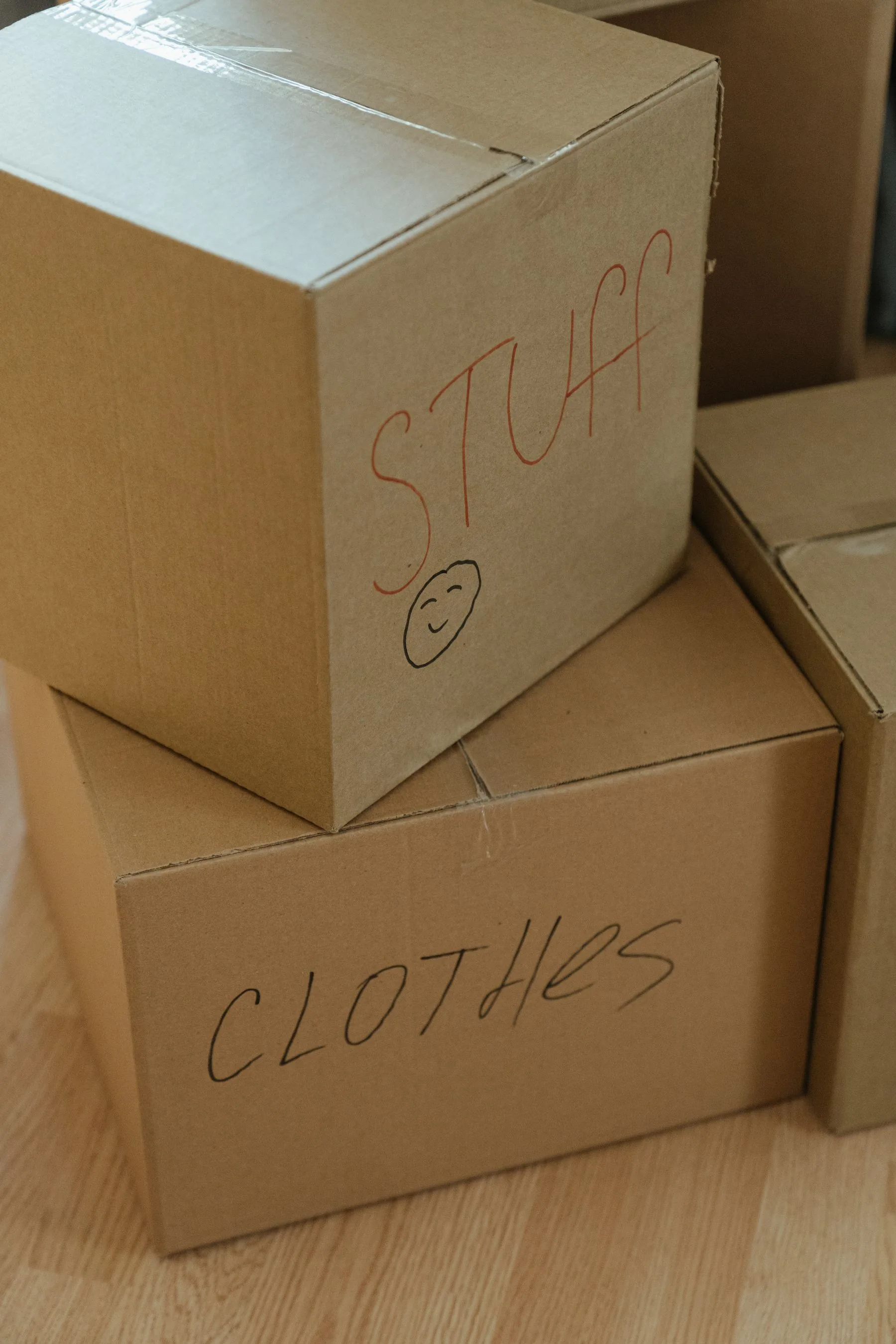
KITCHEN OR PANTRY | GENERAL CONTENTS | HANDLING NOTE | BOX NUMBER
Examples:
KITCHEN | Daily dishes | FRAGILE | 061PANTRY | Sealed dry goods | KEEP UPRIGHT | 062KITCHEN | Small appliance parts | OPEN FIRST WEEK | 063
Keep a private record with more detail. Record appliance parts, valuable collections, and any box that must be checked quickly after delivery. Do not put account information, expensive-item details, or private household data on the exterior.
The room-by-room packing checklist explains how the kitchen connects to the whole-home inventory and destination room system.
Final kitchen walkthrough
Before the kitchen is cleared:
- Check every cabinet, drawer, shelf, pantry zone, and appliance compartment.
- Check the top of cabinets and refrigerator.
- Confirm owner-controlled food and first-meal supplies are separate.
- Confirm connected appliances are handled by the responsible person.
- Remove waste and donation items.
- Verify all liquids and restricted items followed the chosen path.
- Count cartons and large items.
- Photograph the cleared room for the owner's record.
- Keep basic cleaning supplies available until the final origin walkthrough.
At the destination, place kitchen and pantry room signs before unloading. Direct daily-use and first-week boxes to an accessible area without blocking appliance installation or walkways.
Where Pearl Movers fits
Turn the plan into a clear moving request
Pearl Movers provides packing and moving services for Portland-area households. Customers should identify the desired packing level, kitchen inventory, fragile groups, appliances, owner-controlled food, access conditions, and any items that may require a separate decision. The written scope should state who supplies materials, who packs each category, and what Pearl Movers will not accept.
Review Pearl Movers packing services or request a quote with the move date, addresses, inventory, access notes, and requested packing help.
Common questions
Portland metro moving FAQs
How many days before moving should I pack the kitchen?
Begin two to four weeks ahead with duplicates, serving pieces, specialty appliances, and extra pantry goods. Reduce to a small daily-use kitchen during the final week. The exact timing depends on household size, work schedule, food plan, and whether packing help is included.
What size box should I use for dishes and cookware?
Use a strong small or medium carton that remains manageable when full. Dense cookware, dishes, cans, and pantry goods can overload a large box quickly. Test the weight during packing instead of waiting until the carton is closed.
Should plates be packed flat or on edge?
Many packing systems place individually wrapped plates on edge with cushioning and no empty movement. The carton, divider system, plate type, and mover's method matter. Ask Pearl Movers to confirm its packing standard when the company is packing the kitchen.
Can I move food in the refrigerator or freezer?
Do not assume food can stay inside an appliance. Confirm the appliance preparation plan and mover policy. Perishable food needs a separate temperature-controlled plan that follows current government food-safety guidance.
What kitchen items should stay with the owner?
Keep perishable food coolers, medication-related food, drinking water, first-meal supplies, valuables, important documents, keys, and any irreplaceable item under owner control.
What should I do with cleaners, paint, propane, or pesticides?
Do not place them in ordinary moving cartons. Confirm restricted items with Pearl Movers and use current Metro household hazardous waste guidance for proper local handling or disposal.
Local planning references
Official and authoritative sources used
- FoodSafety.gov four steps to food safety
- FoodSafety.gov cold food storage chart
- FoodSafety.gov guidance for keeping food cold
- Metro household hazardous waste disposal
- Metro Find a Recycler
Permit, parking, construction, and access rules can change. Confirm current requirements with the responsible city, county, property manager, association, or service provider before move day.