
Why the address alone is not enough
Two homes on the same Portland street can have different access. One may have a level driveway and ground-floor entry. The other may have a narrow curb, steep steps, a retaining wall, a long side path, and an interior turn that prevents a large piece from reaching the intended room.
Map apps show roads and estimated travel. They do not reliably show:
- The legal position available during the move window.
- A driveway's working width or slope.
- Gate and fence clearances.
- Exterior stair count and landing depth.
- Interior ceiling height at a turn.
- Elevator dimensions or reservation rules.
- Furniture dimensions.
- Temporary construction, parked vehicles, tree growth, or surface damage.
The audit turns those unknowns into a photo and measurement record. Use it with the complete Portland moving checklist.
Audit the truck approach first
Approach the property from the direction the vehicle is expected to arrive. Record:
- Street name and traffic direction.
- Street width and centerline condition.
- Posted parking, loading, weight, height, or time restrictions.
- Bike lanes, bus areas, driveways, hydrants, and corners.
- Low branches, overhead wires, awnings, and balconies.
- Steep grades, sharp turns, dead ends, and turnaround options.
- Construction, closures, or recurring congestion.
Do not stand in traffic to take photos. Use safe, legal observation points. Check ODOT TripCheck and local notices closer to the move because road conditions can change after the audit.
Confirm the legal vehicle position
Mark the exact place where the vehicle is expected to stand. Decide whether it is:
- A private driveway.
- A private loading area.
- An unrestricted legal curb space that is not reserved.
- A building-controlled dock or loading zone.
- Public curb space that must be reserved through PBOT.
If exclusive Portland curb space is needed, use the moving-truck parking permit guide. A photo of an empty curb does not guarantee it will remain empty on move day.
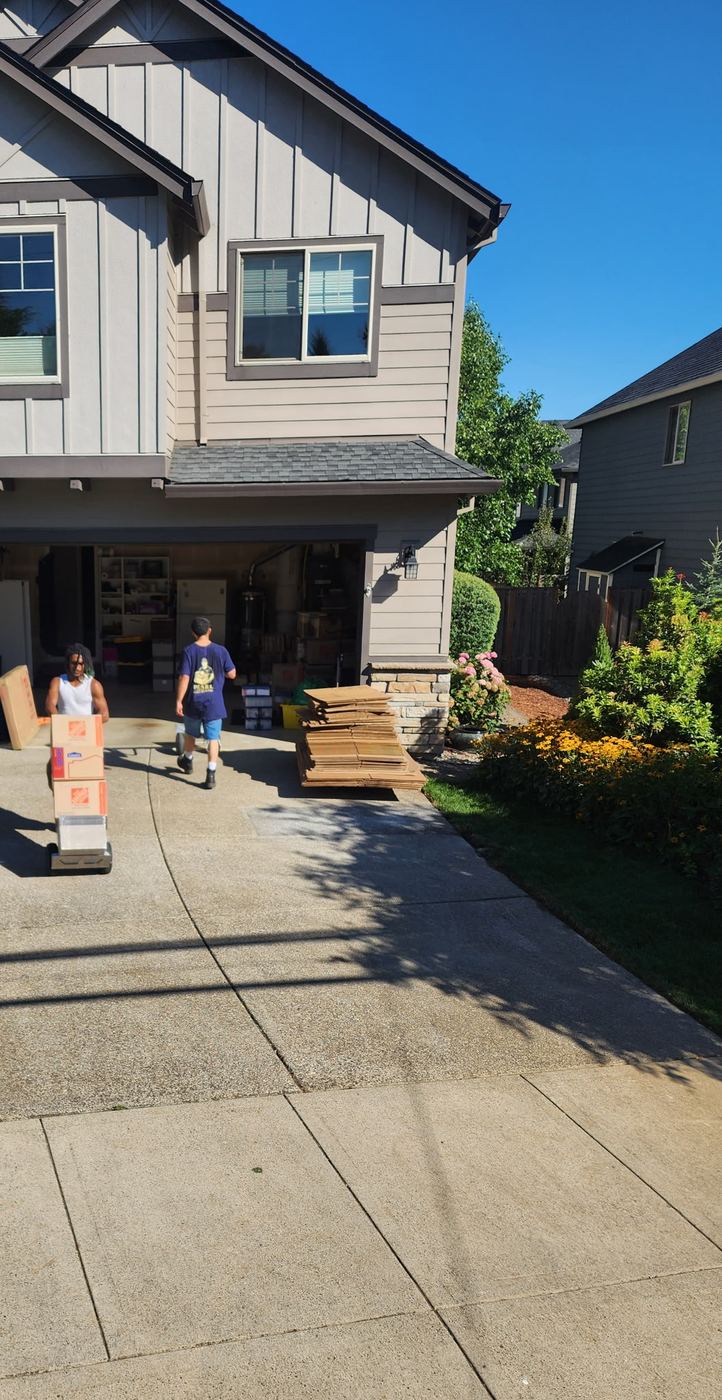
For a driveway, photograph the entry from the street and record:
- Width at the narrowest point.
- Surface and visible condition.
- Slope and changes in grade.
- Gate opening.
- Clearance above and beside the route.
- Available turn or exit path.
Do not tell a large vehicle to enter a private drive based only on a passenger-car experience. The mover must review the actual conditions and vehicle plan.
Measure the complete carrying distance
Measure from the expected vehicle position to the main entry. If the route turns around a building, passes through a garage, uses an elevator, or crosses multiple levels, record each segment.
Use this worksheet:
| Segment | Distance or count | Surface | Width | Steps | Concern |
|---|---|---|---|---|---|
| Truck to property edge | |||||
| Property edge to entry | |||||
| Entry to stairs or elevator | |||||
| Vertical travel | |||||
| Hallway to room |
Photograph long carries, gravel, soil, grass, slopes, drainage areas, and exterior steps. Note how rain, ice, darkness, or heat could change the path. The Portland rain moving guide provides a wet-weather zone plan.
Photograph every transition point
A transition point is where the route changes direction, width, height, level, surface, or access control. Common examples include:
- Curb to sidewalk.
- Driveway to path.
- Gate to yard.
- Exterior step to porch.
- Door to vestibule.
- Hallway to stair.
- Stair to landing.
- Elevator to corridor.
- Corridor to residence.
- Residence door to final room.
Take one photo facing into the transition and one looking back. Include a tape measure or written measurement when the size matters. Avoid showing keys, access codes, children's information, mail, license plates, unit numbers, or private documents.
Measure furniture against the tightest route
For each large piece, record height, width, depth, and any component dimensions after approved disassembly. Typical items to review include:
- Sectional components.
- Bed frames and headboards.
- Tables and desks.
- Cabinets and armoires.
- Sofas and sleeper sofas.
- Large artwork and mirrors.
- Exercise equipment.
- Appliances when they are part of the confirmed scope.
Then compare those dimensions with the narrowest door, gate, stair turn, landing, elevator, and ceiling condition. A diagonal route may change the usable clearance, but do not assume an angle will solve the fit. Let the mover review the measurements and photos.
Audit stairs as a three-dimensional route
Stair width alone is not enough. Record:
- Width at handrails and obstructions.
- Landing length and width.
- Ceiling height above treads and landings.
- Turn direction.
- Number of steps and flights.
- Door swing at the top or bottom.
- Railings, light fixtures, windows, and wall projections.
- Surface material and visible condition.
For curved stairs, split the measurement into several points. For exterior stairs, note drainage, moss, leaves, loose material, and lighting without making a structural judgment.
Audit the destination placement, not just entry
A large item can enter the home and still fail to reach its intended room. Decide:
- Destination floor and room.
- Final wall or orientation.
- Whether the room will be clear.
- Whether doors need removal or furniture needs approved disassembly.
- Where items may be staged without blocking the route.
- Who can approve an alternate placement.
Label boxes and furniture with the same room names used on the destination map. This reduces repeated carrying and prevents hallways from becoming decision zones.

Build a shareable access packet
Organize the packet in this order:
- Address and safe arrival note.
- Street approach photos.
- Legal vehicle position.
- Carrying-distance worksheet.
- Exterior transitions.
- Interior doors, stairs, elevator, and corridors.
- Large-item measurements.
- Destination placement map.
- Building or association instructions.
- Weather and backup-access notes.
Label every image with the address role, such as Origin | driveway entry | facing street, rather than leaving a camera roll of unlabeled photos.
Access audit red flags to resolve before scheduling
- No confirmed legal truck position.
- Vehicle plan based only on a map pin.
- Unmeasured gate, stair turn, elevator, or large item.
- Long carry not included in the request.
- Shared access that requires property approval.
- Low clearance or steep driveway that has not been reviewed.
- Destination furniture placement still undecided.
- Permit, elevator, or gate request still pending.
- Construction or road closure affecting the approach.
- Personal vehicles or stored items blocking the route.
A red flag is not always a reason to reject the date. It is a prompt to gather the missing fact and agree on a workable plan.
Where Pearl Movers fits
Turn the plan into a clear moving request
Pearl Movers can review a Portland-area moving request when the customer sends both addresses, the room-by-room inventory, access photos, measurements, building instructions, and placement needs. The company should make the vehicle and service decision from that information rather than from an article or the customer's guess.
Review local moving information or request a quote with the access packet.
Common questions
Portland metro moving FAQs
What photos should I send for a moving quote?
Send the street approach, legal truck position, driveway or curb, full carrying path, gates, exterior and interior stairs, elevators, narrow doors, tight turns, and large items. Label the origin and destination clearly.
How do I measure carrying distance?
Measure the practical route from the expected vehicle position to the main entry, then add interior segments to stairs, elevators, hallways, and final rooms. Note surface and step changes.
Can a steep driveway affect the moving plan?
Yes. Grade, width, surface, clearance, turning space, and exit path can affect whether a vehicle should enter and how far items must be carried. Send photos and measurements for review.
What furniture measurements matter?
Record height, width, depth, and component dimensions after any approved disassembly. Compare them with the tightest gate, door, stair turn, landing, elevator, hallway, and ceiling condition.
Should I include the destination in the access audit?
Yes. The destination can be more restrictive than the origin. Audit the full route and final room placement at both properties.
Does an access audit determine the final quote?
It improves the information available for review. The company must still evaluate the inventory, date, route, services, and job-specific conditions before confirming scope or pricing.
Local planning references
Official and authoritative sources used
Permit, parking, construction, and access rules can change. Confirm current requirements with the responsible city, county, property manager, association, or service provider before move day.