

Why is a split move harder than a normal move?
A normal move has one inventory and one destination. A split move has two of each, plus a third list nobody likes to write: the things that are not decided yet. The crew can carry anything, but they cannot rule on whose lamp it is, and a move-day disagreement stops the loading while everyone stands in the driveway.
It also changes the access work. Both destinations need their own check: stairs, parking, elevators, the carry from the curb. An apartment on one end and a house on the other are two different plans that happen to share a truck. The access audit is worth doing for each address separately.
None of this is difficult once it is on paper. The goal of everything below is to take every decision out of move day.
How should you divide the furniture and boxes?
Walk the house room by room with a written list and give every piece of furniture one of four marks: first home, second home, staying (if one person keeps the original home), or undecided. Do boxes the same way, by category rather than one at a time. Kitchen, books, linens, tools, and decor each get split once, and the packing follows the split.
The home inventory guide is the right method for the furniture list; in a split move you just run it with two columns. Photograph the larger pieces as you go. The photos end up useful twice: once for the quote, and once if anyone later asks what was agreed.
Some things should not ride on the truck at all. Documents, passports, medications, keys, jewelry, and small items with sentimental value are better moved by their owners in their own cars. Pack those privately and early.
How do you label boxes for two destinations?
Room names are not enough, because both homes have a kitchen and a bedroom. Label with the destination first and the room second: a surname or first name, or a color of tape for each home, then the room. Put the label on two sides of every box so it can be read in a stack.
Tag furniture the same way, with a piece of colored tape or a tag on a leg or handle. Mark anything staying in the original home with a clear "stays" tag, so it does not get loaded by accident. The box labeling guide covers the general system; the split-move rule is simply that the destination comes before everything else.
Before the crew starts, walk the house once with the lead and point out the colors. That five minutes saves an hour of questions.
One truck or two?
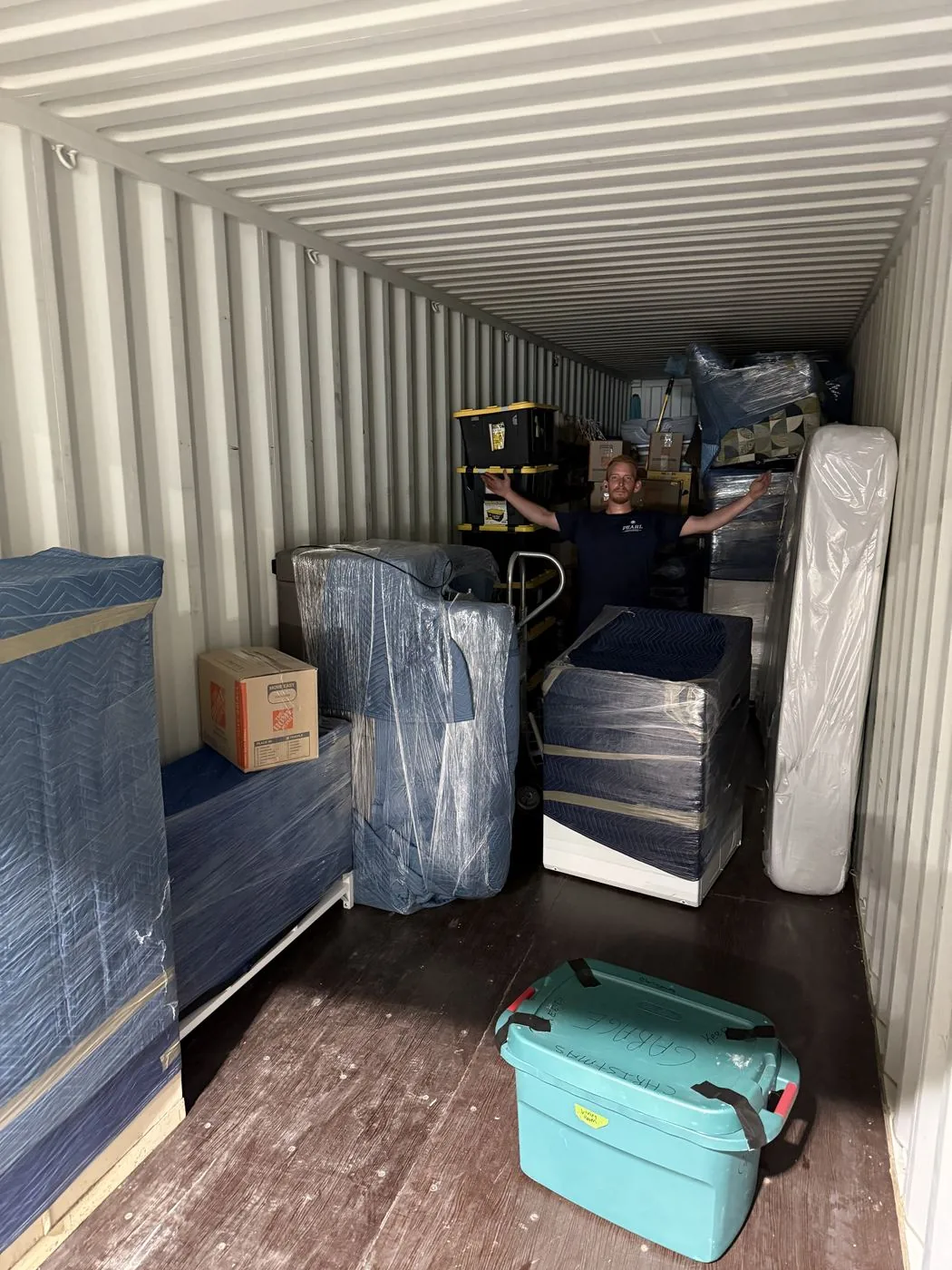
Many split moves run as one crew and one truck making two deliveries, which works when the two destinations are reasonably close and the combined load fits. The crew loads the second stop's items first, deep in the truck, and the first stop's items last, near the door. At the first address they unload only that home's colors and drive on.
Two separate moves, on the same day with two crews or on different days, make more sense when the destinations are far apart, the volume is large, or one home is not ready yet. If one person is keeping the original home, it is really a one-destination move from a shared house, and only the leaving half needs to be packed and quoted.
How long each version takes depends on handling and access more than distance. The local move timing guide explains why, and the local moving page covers how Pearl Movers sets the crew and truck from the inventory.
What about the things nobody has decided on?
Every split move has an undecided pile, and it should not be left for the crew. The simplest neutral answer is a storage unit: the undecided items go there on move day and get sorted later, without a truck waiting. The storage guide and the storage solutions page explain how a storage stop fits into the same job.
The other answer is to shrink the pile. Furniture that neither person wants is volume nobody should pay to carry; sell it, donate it, or recycle it before the move. The declutter checklist covers the order of operations.
What should move day look like?
Agree in advance who will be at the house to answer for the tags, and who will meet the crew at each destination. If the people involved would rather not overlap, that is a legitimate part of the plan: one person can be at the house for the loading and the other at their new home for the delivery. Tell the mover which contact covers which address.
Handle the paperwork separately for each person. A USPS change of address filed for the whole family moves everyone to one address, so people going to different homes each need their own request. The utilities and address-change checklist covers the rest, and each household should make its own first-night box.
A 7-item split-move checklist
- List every piece of furniture with one mark: first home, second home, staying, or undecided.
- Split boxes by category and pack each category to its destination.
- Label every box and piece with the destination first, by name or tape color, then the room.
- Keep documents, medications, keys, and valuables with their owners, off the truck.
- Check access at both destinations, and send both addresses with the inventory.
- Send undecided items to storage or sell them before move day.
- Name one contact at the house and one at each delivery address, and file separate address changes.
Where Pearl Movers fits
Send both addresses and the split list
Pearl Movers quotes split moves from one pickup, two destinations, and the list of what goes where. With the split inventory, both addresses, and any storage stop in the request, the crew can load for two deliveries and nobody has to make decisions in the driveway.
See how local moving works, add a storage stop for the undecided items, or request a quote with both addresses.
Common questions
Split move FAQs
Can movers deliver to two different addresses in one day?
Often, if the addresses are reasonably close and the combined load fits one truck. The crew loads the second stop's items first and the first stop's items last. Share both addresses and the split inventory in the quote request so the mover can confirm whether one day works.
Who should be at the house on move day?
At least one person who can answer for every tagged item, and ideally someone at each delivery address. The crew follows the labels; they cannot settle which item belongs where, so any open questions should be settled before the truck arrives.
What if we have not agreed on some items yet?
Tag them as undecided and either leave them at the original home or send them to a storage unit as a neutral place. Moving an undecided item twice costs less than a move-day argument, and it keeps the crew's plan simple.
Do both people need their own change of address?
If the household is splitting, yes. A USPS family change of address moves everyone in the household to one new address, so people going to different homes should each file an individual request.
Planning references
Official and authoritative sources used
- USPS mail forwarding
- USA.gov address-change guidance
- ODOT household goods moving
- Metro, Find a Recycler
Permit, parking, construction, and access rules can change. Confirm current requirements with the responsible city, county, property manager, association, or service provider before move day.