
The phases of a professional move day
Every professional local move runs through the same sequence, whatever the home size. Knowing the phases makes the total time make sense.
The day opens with arrival and a walkthrough. The crew lead confirms what is going, what is staying, which items need special handling, and where the truck sits relative to the door. Ten or fifteen minutes here prevents an hour of confusion later.
Protection comes next. Floor runners go down, door jambs and stair rails get padded, and tight corners get checked before anything heavy moves through them. Households sometimes read this step as time lost, but protected paths are what let the crew move at full speed for the rest of the day without babying every turn.
Then disassembly. Bed frames come apart, table legs come off, mirrors leave dressers. Each piece gets wrapped as it is broken down so it travels straight to the truck.
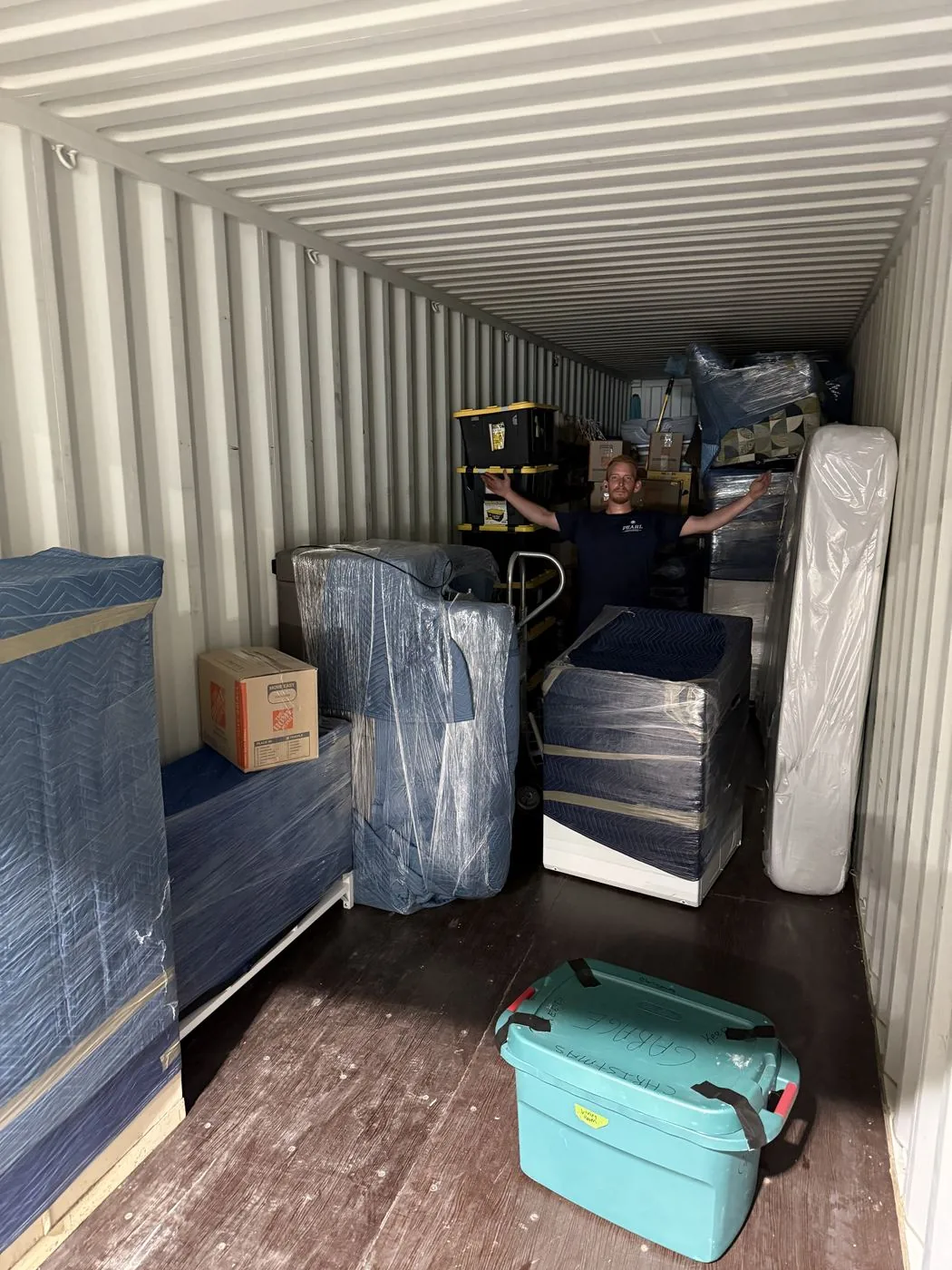
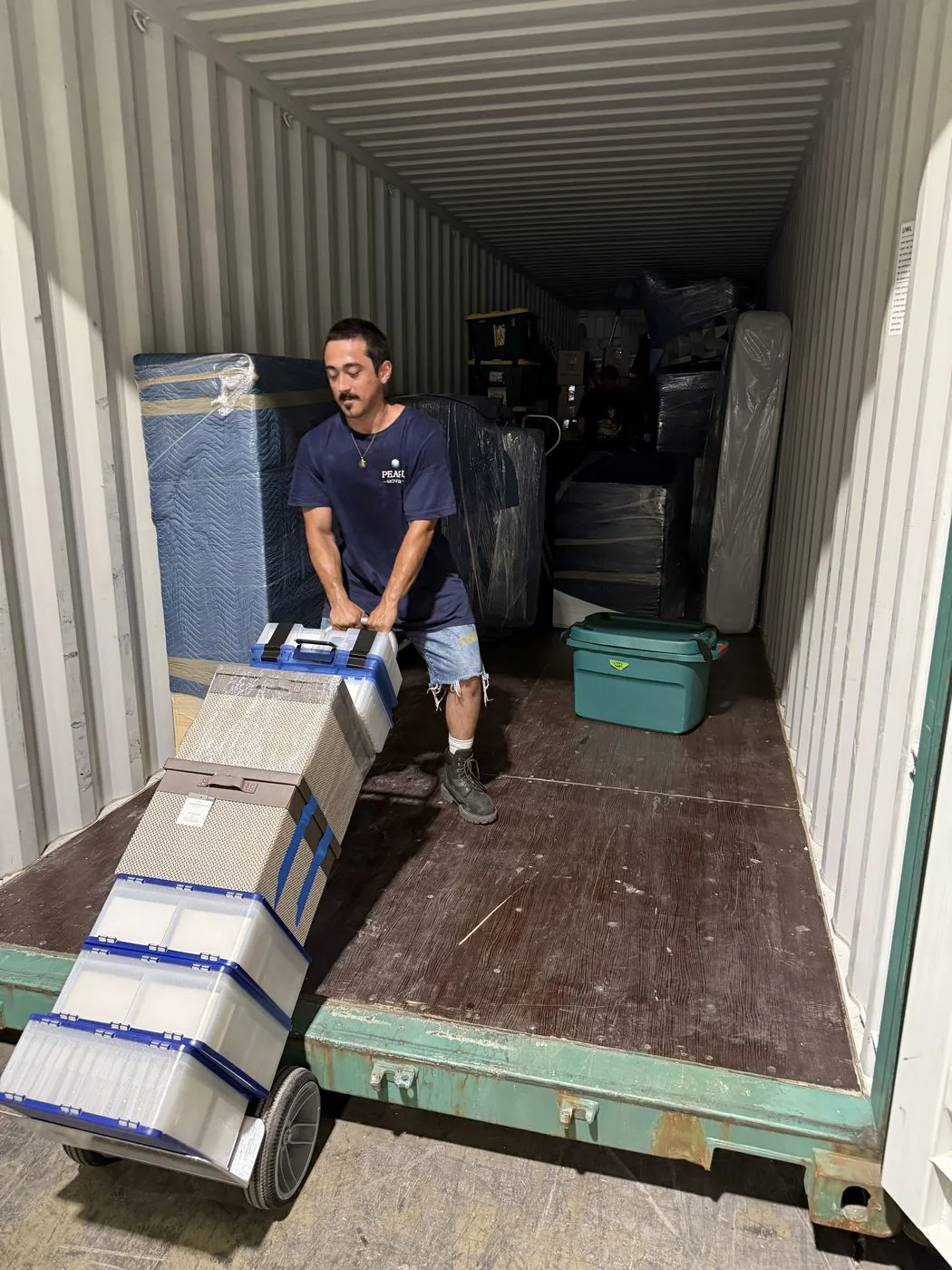
Loading is the long phase. Furniture is blanket-wrapped, boxes are staged by weight, and everything goes on in a planned order so the load rides tight and nothing shifts. This is deliberate work. A load built in a hurry costs time twice, once when something has to be restacked and again if something arrives damaged.
Travel on a local move is usually the shortest leg on paper, though Portland traffic can change that, which gets its own section below.
Unloading runs faster than loading because the decisions were already made. Boxes labeled by destination room go straight where they belong, furniture gets reassembled, and the day ends with a final walkthrough so nothing is left on the truck and nothing sits in the wrong room.
So if the load takes noticeably longer than the unload, nothing has gone wrong. That is how most move days run.
Typical timelines by home size
The ranges below reflect typical industry experience for local moves where access is simple, meaning parking near the door, few or no stairs, and packing finished before the crew arrives. Treat them as observations rather than commitments; stairs, long carries, and packing scope stretch every one of them.
A studio or one-bedroom apartment commonly runs in the range of three to five hours from arrival to final walkthrough. With easy access and everything boxed, some finish faster. A third-floor walkup on both ends pushes the range the other way.
A two-bedroom apartment or small house tends to land around four to seven hours. This is the size where preparation shows most clearly. A fully packed two-bedroom moves crisply. The same two bedrooms with open drawers and loose closets can absorb an entire extra crew-hour before the first sofa leaves the building.
A three- or four-bedroom house is most of a working day, often in the range of six to ten hours. Garages, attics, patios, and storage rooms are the usual reason a house outruns its bedroom count. They hold things nobody counted when guessing at the size of the job.
A large home, or any home with a long carry, a steep driveway, or heavy oversized pieces, should be planned as a full day, and a genuinely large or complicated one can reasonably split across two. Nobody enjoys hearing that in advance, but it is easier to plan for a second day than to discover at 8pm that you need one.
None of these ranges is a Pearl Movers quote. Where your own home lands depends on your inventory and your access, and a written quote is how that gets pinned down.
What stretches a move-day timeline
The same house can produce very different days. These are the usual reasons the clock runs long.
Carry distance is the big one. Every extra fifty feet between the door and the truck is paid on every single trip, and a crew makes a lot of trips. Long apartment corridors and far parking add up faster than any other single factor.
Elevators add waiting. A crew that has to wait for a shared elevator, load it, ride it, and wait again on the return can only move as fast as the building allows. Stairs never make the crew wait, but they slow the heavy pieces and wear everyone down across a long day.
Packing that is not finished when the crew arrives slows everything down. Full dresser drawers, open-top boxes, loose lamps, and a kitchen that is half done all force the crew to stop and deal with each item before it can travel. Trying to finish while the movers work around you is the slowest way to pack.
Narrow access costs minutes per piece. Tight stairwells, low basement ceilings, and doorways that need a sofa stood on end all turn a thirty-second carry into a five-minute puzzle.
Weather matters here more than people expect. In the rainy season a crew wraps and covers loads against the wet, protects interior floors more heavily, and walks slick ramps with more care. Each adjustment is small on its own, but across a hundred trips they add real time. The National Weather Service Portland forecast is worth a look the day before any wet-season move.
And then there is the drive between addresses. A crosstown move that crosses the river at the wrong hour can spend more time on a bridge than it planned for the whole travel leg. Checking ODOT's TripCheck for incidents and conditions before the truck rolls is a two-minute habit that saves ugly surprises.
What compresses a move-day timeline
Everything that shortens a move day happens before the crew arrives.
Finished packing is worth more than anything else on this list. Every box sealed, every drawer empty, every loose item inside something with a lid. The room-by-room packing checklist lays out a working order that gets a home to that state without a final-week panic. If the calendar makes that impossible, professional packing the day before is a cleaner fix than racing the crew on move morning.
Labels by destination room turn the unload into a delivery route instead of a question-and-answer session. A box marked for the upstairs office goes to the upstairs office, once, without anyone asking. The box labeling guide covers a system that takes minutes to set up and saves questions all day.
Reserved parking close to the door shortens every trip the crew makes. On a street where spaces vanish by 8am, holding curb space legally is one of the highest-value hours a household can spend before the move.
Cleared hallways and staged boxes help more than they look like they should. A stack of sealed boxes near the door, with walking paths open, lets two crew members carry continuously while a third wraps furniture.
Decisions made in advance close out the list. Knowing which wall the bed goes on and which room is the office before the crew asks means furniture is placed once. Rearranging at hour nine is slow for everyone and hardest on the household.
Timing the day around Portland traffic and buildings
Portland adds a few scheduling wrinkles of its own.
River crossings follow the commute. A loaded truck on the Burnside Bridge at 4pm will sit in the slowest traffic of the day. If origin and destination sit on opposite sides of the Willamette, aim the travel leg at late morning or early afternoon, when the bridges are quieter.
Towers and managed buildings run on elevator reservations and dock hours. The service elevator you booked is yours only for the booked window, and at month-end, when leases roll over, every household in the building wants the same Saturday slot. A missed window can idle a full crew while the building sorts itself out. Book early, confirm in writing, and tell the crew the exact window before move day.
Morning starts leave room for surprises. A crew that starts at 8am has the whole afternoon as slack. A crew that starts at 1pm has almost none if anything runs long.
Season matters at the margins. Summer Saturdays book out and buildings get crowded. Wet-season weekdays are quieter but move slower per trip. Each option just calls for a different set of allowances.
A seven-item time-saver checklist
Seven things, done before the crew arrives, that reliably shorten a local move day:
- Finish packing completely, with every box sealed and nothing loose, before move morning.
- Empty every dresser and desk drawer, even the ones that seem light enough to carry full.
- Label every box with its destination room on the top and one side.
- Reserve or hold legal parking as close to each door as possible.
- Confirm building elevator windows and dock hours in writing at both addresses.
- Clear hallways, stairs, and porches so the carrying path is open end to end.
- Decide furniture placement in the new home before the first piece comes off the truck.
None of them requires special equipment, and together they make for a shorter, calmer day.
Where Pearl Movers fits
Turn a range into a plan for your actual home
The ranges in this guide describe how move days tend to run in general. A written quote narrows that to your actual home: the inventory you have, the stairs or elevators at each address, and the distance from the door to the curb. From there it becomes a plan with a crew size, a start time, and a rough hour-by-hour shape for the day.
Review local moving information or request a quote with both addresses, the inventory, and honest notes about stairs, parking, and packing status.
Common questions
Portland moving FAQs
How long does it take movers to load a two-bedroom apartment?
In typical industry experience, loading a fully packed two-bedroom apartment with simple access often takes roughly two to four hours, and the whole move commonly lands in the four to seven hour range. Stairs, long carries, elevator waits, and unfinished packing push it past that. The reliable number for a specific apartment comes from a written quote based on inventory and access, not from an average.
Why does loading take longer than unloading?
Loading includes the walkthrough, floor and door protection, furniture disassembly, blanket wrapping, and building a tight load so nothing shifts in transit. Unloading is mostly carrying items to labeled rooms and reassembling a handful of pieces. The careful decisions all happen on the loading side, so unloading the same goods usually takes noticeably less time.
Can a local move be done in two hours?
Only the smallest and simplest ones. A lightly furnished studio with ground-floor or elevator access at both ends, everything boxed, and parking at the door can sometimes finish that fast. Even then, the walkthrough, protection, and securing the load take real time that cannot be skipped. For most homes, two hours is not a realistic plan.
Does packing myself make the move faster?
Only if the packing is genuinely finished before the crew arrives. Sealed, labeled boxes move fast. Half-packed rooms, open-top boxes, and full dresser drawers are slower than either finished self-packing or professional packing, because the crew has to stop and solve each one before it can travel.
What time should movers start?
Morning starts give the most room to absorb surprises. They usually beat afternoon traffic, fit inside building elevator and dock windows, and leave daylight for the unload. If a building only offers an afternoon elevator window, plan the travel leg around peak bridge traffic and expect the day to run later.
Local planning references
Official and authoritative sources used
Traffic, weather, building, and access conditions change. Confirm current conditions with the responsible agency, property manager, association, or service provider before move day.