
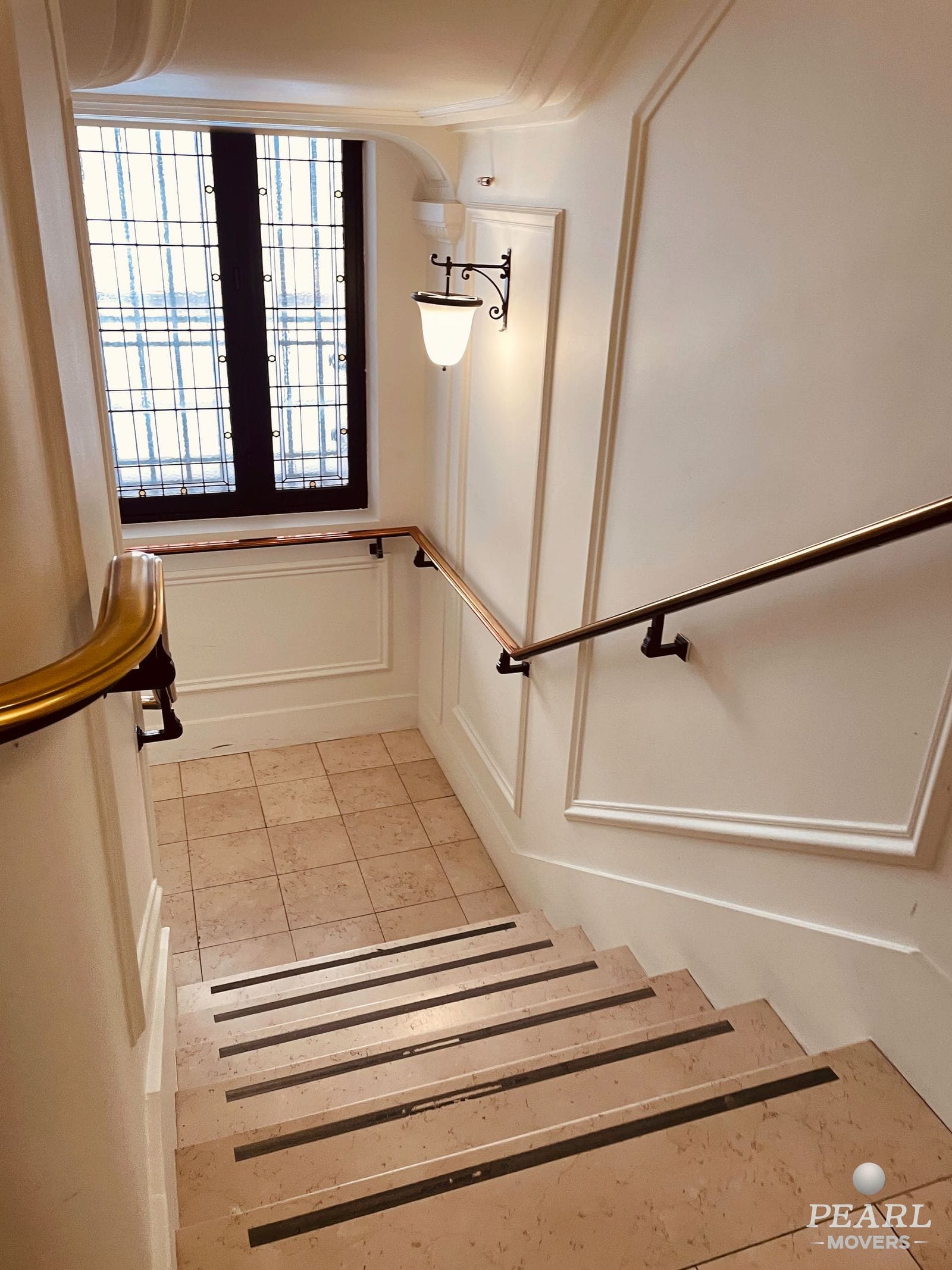
How stairs change the plan and the quote
Most local moves are quoted around labor time, and stairs add labor in ways that are easy to picture once you walk the route yourself. A dresser that rolls thirty feet on a dolly at a ranch house gets carried down two or three flights by hand at a walk-up, one careful step at a time, and then the crew climbs back up empty. Multiply that by every box and every piece of furniture in the apartment and the same inventory becomes a longer day.
Stairs can also change the crew. A two-person team that handles a ground-floor one-bedroom comfortably may become a three-person team at a third-floor walk-up, because someone needs to spot the turns and rotate carriers before arms give out. None of this is a surcharge for the sake of a surcharge. It is the actual shape of the work, and the honest way to think about it is the same way you would think about any hourly job: more handling per item means more time, and more time is what the quote reflects.
The practical takeaway is to describe the building accurately when you ask for the quote. Floor number, flights, switchbacks, landing sizes, the distance from the building door to legal truck parking. A company quoting blind will either pad the number to cover the unknown or quote low and run into a surprise on move day. Our guide to auditing your home's moving access walks through the full measurement routine, and it applies to walk-ups more than to any other building type.
Measure the turns before anyone lifts anything
The width of the stairs matters less than the geometry of the turns. A straight run of stairs will pass almost anything that fits through the apartment door. A switchback with a small landing is where couches get stuck, because the piece has to rotate mid-carry inside a box of walls, rails, and ceiling.
Measure these before move day:
- The apartment door, height and width.
- The stair width at the narrowest point, usually rail to wall.
- The landing depth on every switchback.
- Ceiling height above the landing, since tilting a tall piece needs vertical room.
- The building's exterior door and any vestibule inside it.
- Your longest and deepest pieces: sofa, mattress, dresser, desk, bookcases.
Compare the numbers and flag anything close. A sofa that measures within an inch or two of the landing depth is a judgment call a crew should make before the day, and it may be a piece that comes apart instead. Legs off, cushions out, sometimes the back off a sectional. Disassembly takes time, which belongs in the plan and the quote rather than in a surprise halfway down the second flight.
Protecting rails, corners, and landings
Walk-up damage is rarely dramatic. It is scuffed rails, dented corner beads, and gouged plaster at exactly shoulder height on the turns, and it comes out of a deposit or turns into a repair bill after the lease ends.
Protection works from both directions. The furniture gets wrapped: moving blankets strapped or shrink-wrapped so a corner that kisses the wall leaves nothing behind. The building gets covered where contact is likely: padding tied onto the rail and newel post at each turn, corner guards on the tightest bends, and a runner or ram board on landings where boots and dolly wheels will grind grit into the finish all day.
Two questions worth settling in advance. First, what does the crew bring? Professional crews carry blankets and straps as standard equipment, but rail padding and floor protection vary by company and by job, so ask rather than assume. Second, what does the building require? Some older Portland buildings are lightly managed and leave protection entirely to you. Managed properties may have written rules about runners and elevator or stairwell padding, and it is your job as the tenant to know them before the crew arrives.
Wet days raise the stakes, because the same treads that were merely narrow in July are narrow and slick in November. Stage a mat inside the building door, assign someone to keep the landings dry, and slow the pace rather than fighting it.
Why third-floor DIY days go wrong
Renting a truck and rounding up friends can be the right call for some moves, and we say so plainly in our movers versus rental truck comparison. A third-floor walk-up is where that math turns over, and it is worth being specific about why.
The first problem is fatigue. Stair carrying is the most tiring work in a move, and volunteers have no pacing instinct for it. The first couch of the day goes fine. By the fourth hour, grips weaken, steps get sloppy, and the heavy pieces that got saved for last meet the most tired carriers. Dropped furniture and wrenched backs cluster late in DIY days for exactly this reason.
The second problem is technique. Getting a heavy piece down a switchback is a two-person skill: the lower carrier takes most of the weight while walking backward down stairs they cannot see, the upper carrier controls the tilt, and both need to rotate the piece at the landing without setting it down. Crews do this every week. Most friend groups are learning it live, on the narrowest staircase they have ever carried anything down.
The third problem is that nobody owns the risk. If a professional crew damages the stairwell, there is a company to talk to about it, and it is fair to ask any mover how that conversation would go before you book. Our guide to valuation coverage explains the framework. When a volunteer crew cracks a rail or a friend gets hurt, the cost lands somewhere in the friendship.
If the move itself is small, a studio or a lightly furnished one-bedroom, the crew you need may be smaller and shorter-booked than you think. Our guide to studio and small apartment moves covers what a two-person crew gets done in a morning, walk-up included.
Walk-up move day checklist
Seven things to have done before the first carry:
- Measure the largest furniture against the tightest turn and flag anything within two inches.
- Confirm with the company, in writing, the floor number, flights, and stair layout the quote assumes.
- Decide which pieces get disassembled and have the hardware bagged and labeled.
- Clear the stairwell end to end: mats, shoes, bikes, planters, anything on a landing.
- Settle protection: what the crew brings, what the building requires, what you supply.
- Arrange legal truck standing as close to the door as possible, and check whether the curb needs a permit.
- Plan for weather with a door mat, towels for handrails, and a person assigned to keep treads dry.
Boxes deserve one extra note in a walk-up: pack them lighter than you would for an elevator building. A box that is comfortable to carry across a hallway is heavy by the fortieth stair, and overpacked boxes are how backs get hurt and bottoms give out on landings.
Where Pearl Movers fits
Quote the stairs, not just the apartment.
A walk-up quote is only as good as the description behind it. Send both addresses, the floor and stair details, and a room-by-room inventory, and Pearl Movers can put a real number on the carry. The local moving page covers how a crew runs the day.
Prefer to talk it through? The stairwell is easier to describe out loud. Call (503) 858-9966 or request a quote with photos of the stairs attached.
Common questions
Walk-up moving FAQs
Do stairs make a move cost more?
Stairs usually change the quote because they change the work. A stair carry takes more time per item, may call for an extra crew member, and often requires disassembly that a ground-floor move would skip. Tell the company the floor number, the stair layout, and the largest pieces when you request the quote, and the number you get will match the day you actually have.
Can movers handle a third-floor walk-up with no elevator?
Yes, walk-up moves are ordinary work for a professional crew. Describe the building accurately when booking: the floor, the number of flights, any turns or landings, and where a truck can legally stand. The company sizes the crew and the schedule from that description.
How are stair rails and walls protected during a move?
Common methods include padding on rails and newel posts, corner guards on tight turns, floor runners on landings, and moving blankets wrapped and strapped on the furniture itself. Ask what the crew brings and what the building requires, since some managed properties have their own protection rules.
What should I do before the crew arrives at a walk-up?
Finish packing, clear the stairwell and landings of bikes, shoes, and mats, prop or unlock the building doors you control, confirm where the truck can stand, and keep pets and children away from the stairs while carrying is underway.
Local planning references
Official and authoritative sources used
Permit, parking, construction, and access rules can change. Confirm current requirements with the responsible city, county, property manager, association, or service provider before move day.