
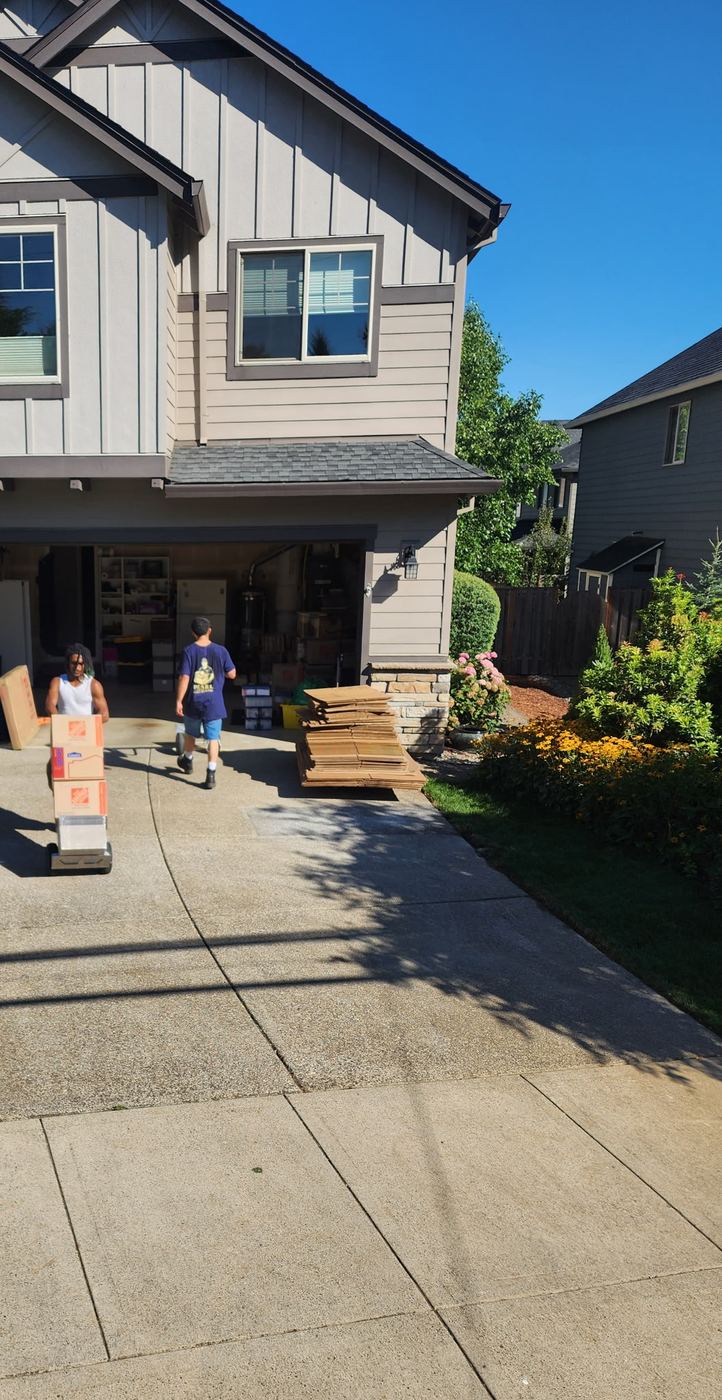
Before the crew arrives
Most of what goes right on moving day gets set up the evening before. When the crew walks into a finished, staged home, they can work at full speed from the first minute. When they arrive while the kitchen is still half in cabinets, they spend the morning waiting on packing instead of loading, and the whole day stretches.
Finish the boxes the evening before, sealed and labeled with a destination room. If some rooms are still open, the room-by-room packing checklist is the fastest way to close them out. Then clear the paths. Hallways, stair landings, and the route to the main door should be open enough for two people carrying a sofa, which is wider than most people picture.
Hold the parking position. If the truck's spot depends on street parking, put a car in it the night before and move the car when the truck shows up. Fifty extra feet between the ramp and the door adds up over a hundred trips.
Set up two zones the crew will not touch. One is the do-not-move zone: a closet or bathroom holding your documents, keys, chargers, medications, and anything else riding in your own car. The second is the first-night kit, packed using the first-night box checklist, so the first evening in the new place does not depend on finding the right carton. Tape a sign on that door, because crews are trained to take everything that is not flagged.
Pets go in a closed room away from the open doors, with water and a sign, or off site with a sitter. There is a full plan in the moving with pets guide, and it is worth reading ahead of time rather than in the middle of the move.
Arrival and the walkthrough
The crew arrives in the window you were given, and the lead introduces the team. Before anyone lifts anything, the lead walks the entire home with you. Every room, the garage, the attic if it has contents, the shed if there is one. The walkthrough is where the crew confirms that what they see matches the inventory and access details behind your quote, and it is your best moment all day to speak up.
Point out what is fragile, what is high priority, and what stays. Show the do-not-move zone. Mention the drawer that sticks and the shelf that is not actually attached to the wall. It only takes a minute, and it spares the crew a lot of guessing later in the day.
Then comes the paperwork, which exists to protect you. Expect inventory and condition documents and the estimate or order for service. Oregon movers give customers the state's General Information Bulletin, which explains how in-state household moves work. Interstate moves come with the federal paperwork described in FMCSA's Your Rights and Responsibilities When You Move handbook. A good crew lead will walk you through each page without being asked. If anything is unclear, ask before you sign instead of waiting until the truck is loaded.
Protection goes in before boxes come out
First-time customers are often surprised when the crew spends the first stretch of the day without carrying anything out. That time goes into protection, and it is normal. Professional crews generally lay floor runners along the main carry path, pad the door jambs that the big pieces will squeeze through, and cover stair rails at the tight turns. In an older Portland house with a narrow Irvington staircase, that padding is what protects a century of original woodwork.
Furniture gets wrapped where it stands. Blankets around the wood, stretch wrap over the blankets or over upholstery, and tape that touches the wrap rather than the finish. A wrapped dresser can look overdone the first time you see it, but that amount of wrap is standard.
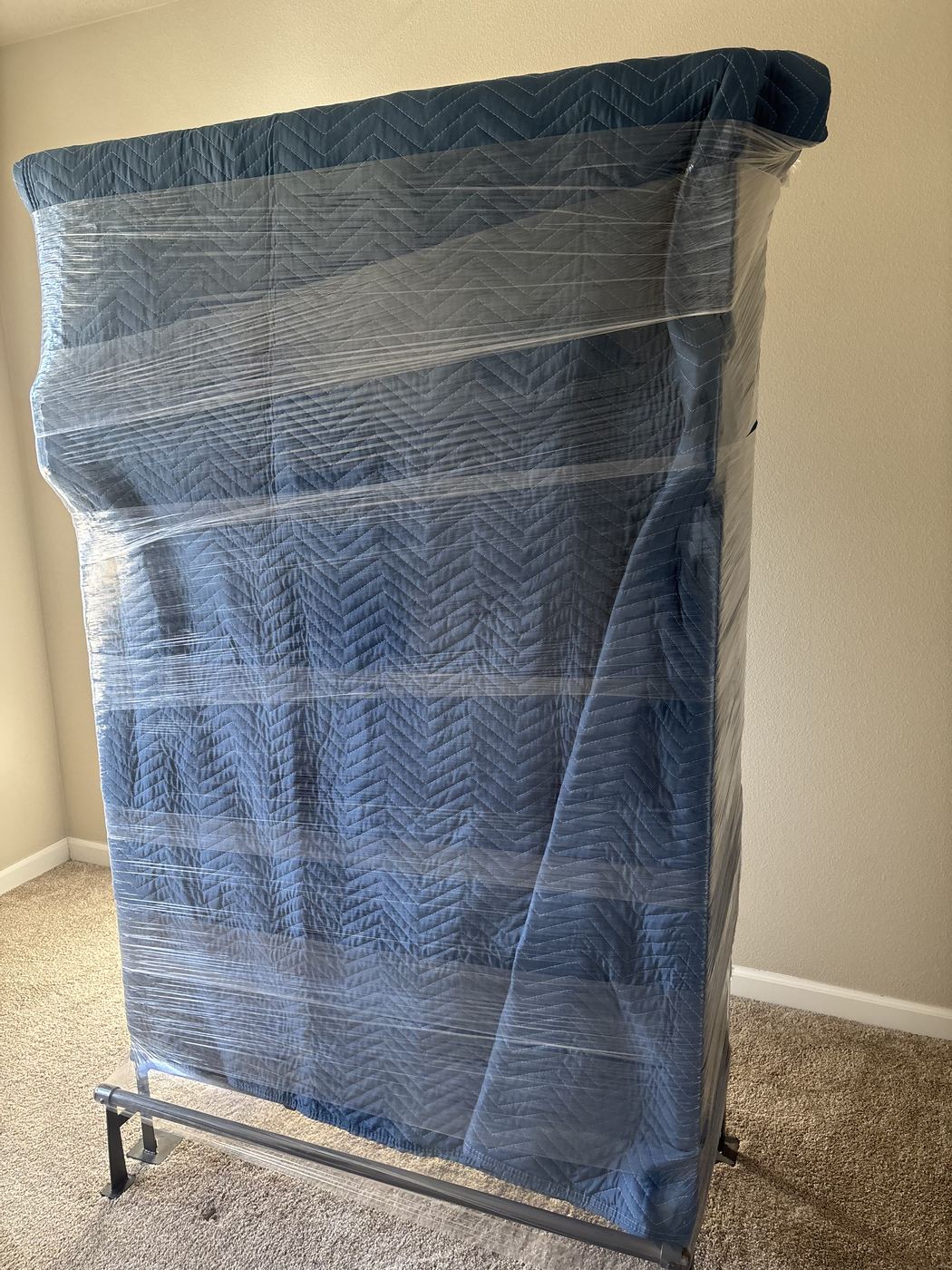
In a Portland winter, add rain wrap to the list. Mattresses, sofas, and anything upholstered gets a plastic layer before it crosses open air to the truck, because a soaked mattress is ruined in the thirty feet between the porch and the ramp. Crews watch the National Weather Service Portland forecast the way you check traffic, and a January move here simply assumes water. If your movers show up with rolls of plastic on a grey morning, it is because they have loaded trucks in this weather before, and nobody is trying to sell you anything extra.
Loading order has logic
Once protection is in, loading starts, and it will probably not happen in the order you expect, which is fine. A truck is loaded like a wall, built in tiers from the cab backward. Large, heavy, flat-sided pieces go in first: dressers, the washer, the sofa on end, mattresses along the walls. Boxes fill the gaps in tight columns, heavy boxes low and light ones on top. Odd-shaped items, lamps, and the last fragile pieces ride in the spaces that remain.
This is why the crew may walk past the boxes stacked helpfully by the front door and come out carrying your bedroom furniture instead. Your staging will get its turn. The load is built so nothing shifts on the drive, the weight sits over the axles, and every cubic foot gets used. A truck packed that way carries everything more safely and takes fewer hours than one loaded loose.
You may also see the crew pause, look at the truck, and rearrange. That is part of the job. The lead is solving a packing puzzle in real time, and ten minutes of restacking in the driveway can spare you a gouged table at delivery.
Transport and delivery
When the last item is on and the doors close, the crew drives to the new address. On a local move you can usually arrive ahead of the truck. Use those minutes well: open the house, prop the door the crew will use, decide which room is which, and stick a note on each bedroom door if the labels use names like "kid 1" that the crew cannot decode on sight.
If the new place is an apartment or one of the downtown towers, the elevator reservation shapes this whole phase. The crew works to the booked window, so confirm it with the building before the day and tell your mover the exact hours. If the crew arrives to find the freight elevator booked by someone else, they can only stand and wait. Elevator access is the kind of detail that belongs in the quote conversation, well before anyone reaches the loading dock.
Delivery runs the load in reverse. Boxes and furniture come off and go to the rooms their labels name, which is the moment all that labeling pays for itself. Beds that the crew took apart in the morning get reassembled, along with whatever else was disassembled for the move, and the crew confirms placement of the big pieces before they leave.
This is the part of the day where your decisions set the pace. "Which wall for the dresser?" takes five seconds to answer when you are standing there. Without you, the same question stops the crew. Walk the rooms ahead of the furniture, decide where the heavy things land, and say so once rather than moving a sofa three times. If you genuinely do not care yet, pick a wall anyway. You can slide a couch somewhere else next week, but a crew holding one while you make up your mind is time you are paying for.
Your role, hour by hour
Your job on moving day is small but constant. In the first hour, you are walking, pointing, and signing. Through the middle of the load you mostly need to be reachable: within voice range or answering your phone, ready for the occasional question about a mystery box or a piece that was not on the inventory. Keep kids and pets out of the carry path all day, because the crew is moving fast with limited visibility and the path belongs to them.
Before the truck leaves the old house, do the final origin walkthrough yourself. Open every closet. Check the attic, the crawl space hatch, the garage rafters, the dishwasher, and behind every door that swings against a wall. Things hide behind doors on moving day more than anywhere else. Only confirm the house is empty after you have looked, because a forgotten attic box is a separate trip nobody enjoys.
At delivery, your hour-by-hour job is placement calls, then the closing walkthrough at the new house: confirm the big pieces are where you want them, note the condition of anything you flagged as fragile, review the paperwork with the lead, and sign off. Then the day is done, and you can reach for the first-night kit you set aside this morning instead of digging through cartons.
The night-before prep checklist
Seven things, done the evening before, that make the whole day smoother:
- Seal and label the last boxes, each with a destination room on two sides.
- Clear hallways, stairs, and the route to the door wide enough for two carriers.
- Park a car in the truck's spot and plan to move it at arrival.
- Stage the do-not-move zone in one closed room with a sign on the door.
- Pack the first-night kit and put it with the do-not-move items.
- Confirm the pet plan: closed room with water and a sign, or off-site care.
- Charge your phone and confirm the arrival window and the crew lead's number.
None of it takes long, and every item shows up in how the day feels. When the home is ready, the crew can run moving day as the routine they have practiced hundreds of times.
Where Pearl Movers fits
The walkthrough starts with the quote
Everything the crew does on moving day traces back to what was confirmed in writing before it. Send both addresses, the preferred date, the inventory, and the access details: stairs, parking, elevators, long carries, and any large or fragile pieces. What Pearl Movers commits to on a given job is what is confirmed in writing with the quote, so the more accurate the details, the more the day matches this article.
Review local moving if the crew handles the lifting while you handle the boxes, or packing services if you want the night-before checklist handled for you. Then request a quote with the details attached.
Common questions
Portland moving FAQs
Do I need to be there the whole time on moving day?
Plan to be present or reachable for the whole day, and physically there at the start and the end. The walkthrough, the paperwork, and the final sign-off need you or an adult you trust to make decisions. Some customers step out during the middle of the load, and that can work if the crew lead has your cell number and you actually answer it. An unreachable customer is what stalls a move.
Should I empty dresser drawers before movers arrive?
Empty them when you can. Light soft items can sometimes stay in a sturdy dresser on a short local move, but full drawers make furniture heavier, strain the frame, and can shift or spill in transit. Anything breakable, valuable, or liquid should come out every time. If you are unsure about a specific piece, ask when you book so the answer is settled before move day.
What paperwork do I sign on move day?
In general, expect inventory and condition documents and the estimate or order for service for your move. The exact set depends on the move type. Oregon movers give customers the state's General Information Bulletin, and interstate moves come with the federal paperwork described in FMCSA's rights handbook, which together explain what applies. Ask your mover to walk you through each page before you sign.
How do movers protect floors and doorways?
Professional crews generally lay runners along the main carry path, pad door jambs and stair rails at the tight turns, and wrap furniture in moving blankets before it leaves its room. In wet weather, soft goods like mattresses and sofas also get plastic wrap before they cross to the truck. If a particular floor, rail, or doorway worries you, point it out during the walkthrough so it gets covered first.
What should I do with pets and kids on moving day?
Keep both out of the carry path. Put pets in a closed room away from the open doors with water and a sign on the door, or arrange care off site for the day. Give kids a job away from the action or a quiet setup in a finished room. Doors stay propped open for hours on moving day, and an open door plus a stressed animal is the most common way pets go missing during a move.
Local planning references
Official and authoritative sources used
- ODOT General Information Bulletin for Oregon household moves
- FMCSA Your Rights and Responsibilities When You Move
- National Weather Service Portland
Permit, parking, construction, and access rules can change. Confirm current requirements with the responsible city, county, property manager, association, or service provider before move day.