
How a container move actually works
The container model unbundles a move. The company you rent from handles delivery, transport, and pickup of the box. Everything else stays with you: packing, loading, securing the load, unloading, and the judgment calls in between. You typically keep the container for days at each end, which is why people describe the experience as moving in slow motion.
A full-service move bundles those same steps back together. The crew arrives with the truck, wraps and loads in a planned order, drives, and unloads room by room, usually inside one day. You are paying for labor and load skill rather than a box on the driveway.
Neither model is the discount version of the other. They distribute the work differently, and the honest comparison asks where the work should sit for your move. This article is the container half of a two-part fork; the sibling question of renting a truck and driving it yourself gets its own treatment in our movers vs rental truck comparison.
When a container genuinely fits
Three situations come up again and again where the container is the right tool.
Flexible dates are the first. If nothing forces the move into a single weekend, loading a little each evening over a week suits some households far better than one intense day. Retired couples, people moving out of a long-held family home, and anyone who wants to declutter while they load often prefer the slower rhythm.
The second is a single open, level driveway at each address. The container model assumes the box can sit close to the door on firm, flat ground for days without blocking anyone. A wide suburban driveway handles that fine. Where that assumption holds at both ends, delivery and pickup are painless.
The third is a storage gap. When one home closes before the next one is ready, a loaded container can go to the provider's storage yard and wait. That collapses two moves into one load and one unload, which is a genuine advantage. If your closing dates do not line up, our guide to moving into storage between homes compares that arrangement with warehouse storage and a crew.
When all three describe your move, a container deserves a serious look, and this article should not talk you out of it.
Loading is still the hard part
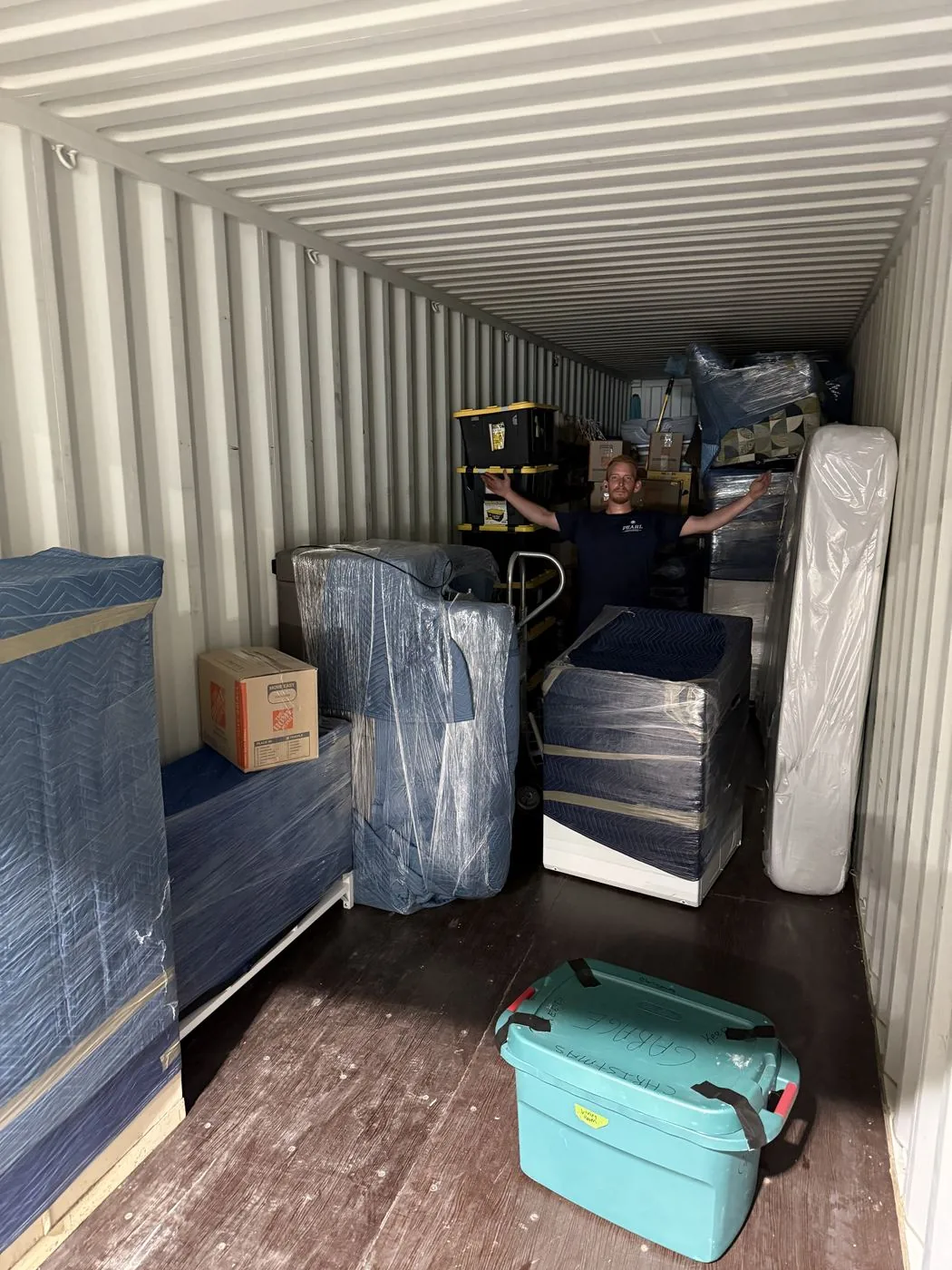
Here is the part the marketing photos skip: the container does not load itself, and loading is where moves go wrong.
A container travels on a truck bed. It gets lifted, tilted, and driven over the same potholes as any trailer, so a loose load shifts. Doing it well means heavy items low and against the walls, tiers packed tight from floor to ceiling, soft items filling voids, and straps at intervals so nothing walks. Furniture needs wrapping before it goes in, because bare wood against bare wood grinds for the whole ride. None of this is obvious the first time, and the first time is usually your own household.
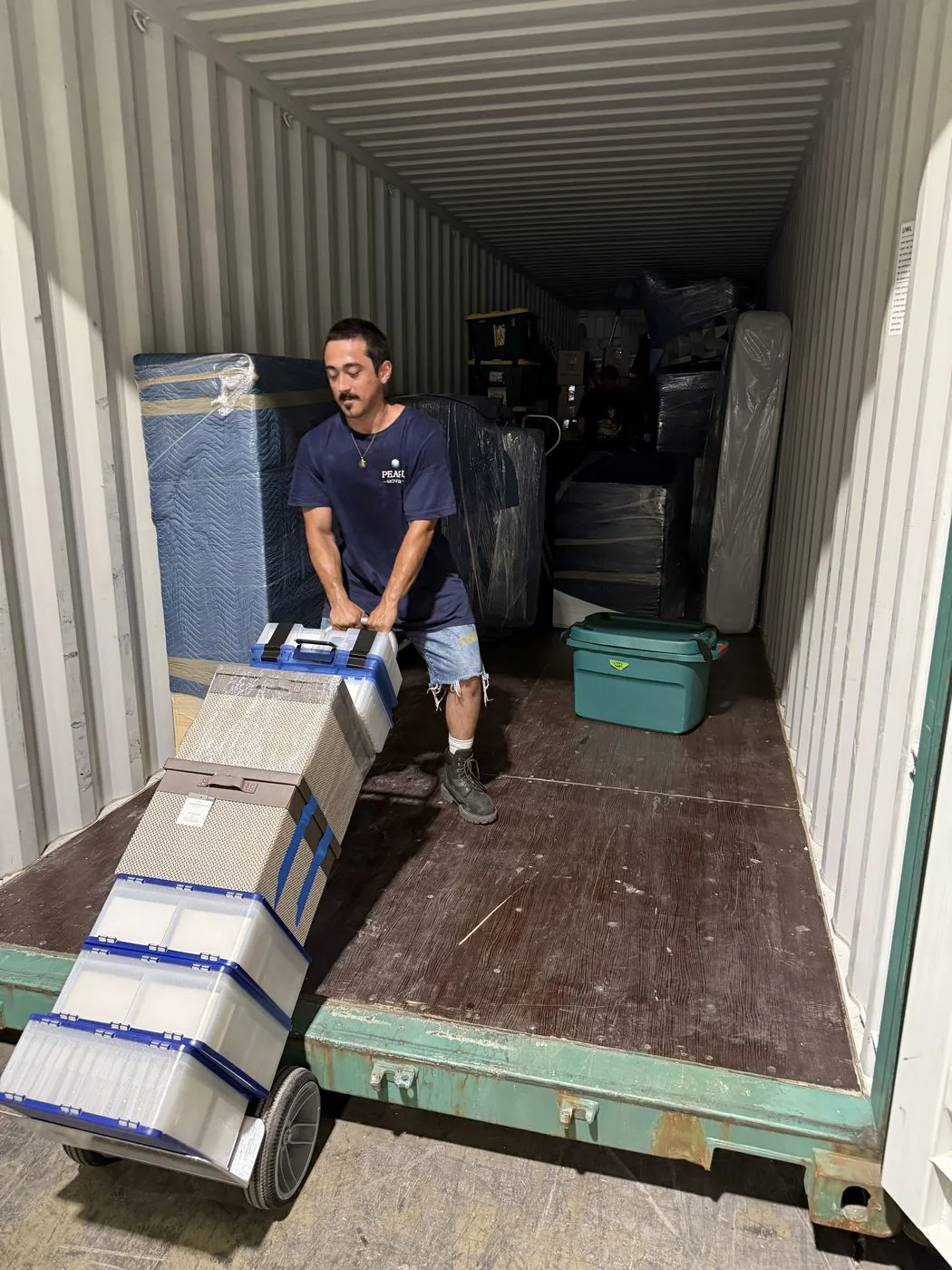
There is also the physics of the doorway. Every armload crosses a threshold, a ramp, and open ground. A sleeper sofa or a dresser that a two-person crew walks out with straps and a dolly becomes a genuine hazard for one homeowner and a helpful neighbor.
The middle path is worth knowing about: some households rent the container for its schedule and storage flexibility, then bring in a crew for the loading and unloading. That pairing keeps the container's advantages and hands the riskiest hours to people who stack loads for a living. Ask Pearl Movers what configurations are available for your specific move rather than assuming a particular arrangement is offered.
Portland conditions that complicate a container
The generic container-or-crew comparison assumes a flat, dry suburb. Portland complicates that in a few specific ways.
Street placement needs a permit. If there is no driveway, the container has to occupy street parking, and Portland treats that as a use of the public right of way. That runs through PBOT's temporary street use permitting, with lead times and posting rules, and the container sits there for days rather than the hours a moving truck needs. Check current requirements at the Portland Bureau of Transportation before you commit to a delivery date, and budget for the possibility that the answer for your block is no.
Slope is the quieter problem. Containers want firm, level ground. Plenty of driveways in the West Hills, Southwest Portland, and the river-facing streets of Lake Oswego and West Linn pitch steeply enough that placement gets awkward or impossible, and a driveway the delivery truck cannot reach settles the question early.
Then there is the wet season. A closed container sheds rain fine. Loading in the rain is another matter: the door stands open for hours, cardboard soaks through fast, and the ramp gets slick exactly where you are carrying the heaviest items. A one-day crew move can pick its weather window or work fast inside a bad one. A week of evening loading sessions in November will meet the rain eventually.
Finally, buildings with rules. Condos and managed buildings that require certificates of insurance, elevator reservations, and tight loading windows rarely have anywhere for a container to sit at all. For those addresses the question usually answers itself.
Containers on longer moves
Containers get marketed hard for moves out of state, and the flexibility argument is real there too: your belongings can wait in the container while you drive, fly, or house-hunt.
The trade-offs scale up as well. A load that shifts over twenty miles shifts more over eight hundred, so load quality matters most on exactly the moves where you have the least practice. And the longer the distance, the more the paperwork matters: interstate household moves fall under federal rules, and the FMCSA's Protect Your Move resources explain the protections that apply and how container arrangements differ from hiring a regulated interstate mover. Moves within Oregon are regulated separately by ODOT, which publishes its own household goods moving guidance.
If the distance is the main reason you are considering a container, price the full-service alternative before deciding. Pearl Movers describes how crewed moves beyond the metro work on the long distance moving page, and a written quote gives the comparison something real to push against.
A seven-question decision checklist
Answer these seven and the fork usually resolves:
- Is there a level, open driveway at both addresses where a container can sit for days without blocking access?
- If not, have you confirmed with PBOT whether street placement is even permitted on your block?
- Are your dates flexible enough that loading over several days is a feature rather than a risk?
- Do you need storage between homes, and would container storage beat a warehouse for your situation?
- Who is physically loading, and have they moved heavy furniture down a ramp before?
- What does the forecast look like across your whole loading window, not just one day?
- Have you priced a full-service crew for the same move, so the comparison is real numbers rather than assumptions?
Mostly favorable answers point to the container. Trouble on the driveway, the calendar, or the loading questions points to a crew, and a mixed result is a good reason to price both before committing either way.
Where Pearl Movers fits
Put a real quote next to the container math.
The comparison only works if both sides have numbers. Send the addresses, the date range, a room-by-room inventory, and the access details, and Pearl Movers can quote the crewed version of your move. If the container still wins for your situation, you will know it for sure instead of guessing.
Request a quote with your inventory, or call to talk the two options through for your specific addresses.
Common questions
Container vs full-service FAQs
Do I need a permit to put a moving container on a Portland street?
If the container sits in your own driveway, generally no. If it needs to occupy street parking or any part of the public right of way, Portland handles that through PBOT's temporary street use permitting, which takes lead time and has its own rules about signage and placement. Verify current requirements with PBOT for your exact address before you reserve a delivery date.
Can a moving crew load a container I rented?
Some households rent the container themselves and bring in a crew for the loading, which pairs the container's flexible schedule with practiced hands on the heavy work. Ask Pearl Movers what configurations are available for your specific move rather than assuming a particular arrangement is offered.
How long does a container move take compared to a full-service move?
A full-service local move is usually a single day. A container move spreads across the rental window: a few days to load, transit or storage time in the middle, then more days to unload. That longer window is the whole appeal for some households and a liability for others, especially when a lease end or closing date is fixed.
Are portable containers weatherproof in Portland rain?
A closed container sheds rain. The exposure happens while the door is open: every trip from the house crosses open air, boxes absorb water fast, and a wet ramp gets slick. Multi-day loading in the wet season means planning tarps, floor protection, and loading sessions around the forecast.
Local planning references
Official and authoritative sources used
Permit, parking, construction, and access rules can change. Confirm current requirements with the responsible city, county, property manager, association, or service provider before move day.