

Where the hours actually go
Picture a two-bedroom move across Portland. The crew arrives, protects the floors and door frames, wraps the furniture, carries every piece and every box to the truck, loads it so nothing shifts, drives, then reverses the whole sequence at the other end. The local move timeline guide puts numbers on the day. Now take out the drive. What is left is most of the day.
That is the whole argument. The drive on a short move might be five minutes instead of forty. Everything else is the same work on the same items. The pieces still need wrapping, because a sofa scrapes a door frame just as easily on the way to the next building. The boxes still need carrying, one trip at a time, along whatever route exists. The load still has to be built so it does not shift when the truck turns a corner.
So the honest way to think about a short move is as a normal move with a shorter drive. That framing prevents the mistake everyone makes, which is to plan for the drive and forget the handling.
Moving within one building
A move from one unit to another in the same building sounds like the easiest possible job. In practice it has the tightest constraints of any move, because the elevator is the entire route and the building controls it.
Most managed buildings require an elevator reservation for a move, with pads installed and a set window. For a same-building move you need that window for two units, and buildings do not always treat that as one reservation. Ask the manager exactly what is required, in writing, and whether the same window covers both the origin and the destination unit. The condo and managed-building checklist covers the rest of the paperwork, and the COI and elevator guide explains the certificate of insurance the building will ask the mover for.
Then there is the question of where the load waits. On a normal move, the truck holds everything between the two addresses. On a same-building move with two units on different floors, the crew often works in stages: empty part of the old unit, move it up, place it, come back. That is more efficient than it sounds, but it depends on the destination unit being empty and ready when the crew arrives. If the previous tenant is still moving out, the whole plan stalls.
If the units are in different buildings of one complex, the truck is back in the plan. It has to stand somewhere legal for the whole job, and a complex with assigned parking and fire lanes rarely has an obvious place. Settle that with the manager before the day.
A few blocks across the neighborhood
A move of a few blocks is a full move at both ends with a very short drive in the middle. The truck loads completely at the old address, drives around the corner, and unloads completely at the new one. There is no shortcut through that, because the alternative, carrying furniture down the sidewalk, is slower than loading the truck and worse for the furniture.
What changes is parking. On a cross-town move, the two addresses have separate parking problems. On a neighborhood move, they can share one. If both addresses are on residential streets, a single temporary street use permit from PBOT may need to cover two curb spaces on the same day, and the parking permit guide covers how to arrange that. In a permit-parking zone, the answer is the same permit twice.
The advantage of a neighborhood move is that a second trip is cheap. If something does not fit on the truck, or a piece is discovered late, the crew can go back without losing an hour on the road. That is the one place the short distance really helps.
The truck as a staging area
On a short move, the truck earns its place even when the drive is trivial, because it is where the load is organized. A crew that loads everything, then drives, then unloads in placement order works faster than a crew running individual pieces back and forth between two doors. Each item is handled twice, once in and once out, and both handles are planned.
That matters for protection too. Furniture wrapped and stacked in a truck is safer than furniture leaning in a hallway waiting for its turn. And it matters for the building: a same-building move done as a series of hallway trips ties up the elevator and the corridors for far longer than a staged load does.
So when a mover proposes a truck for a move that could technically be walked, the truck is the shorter version of the day.
Why the do-it-yourself short move goes wrong
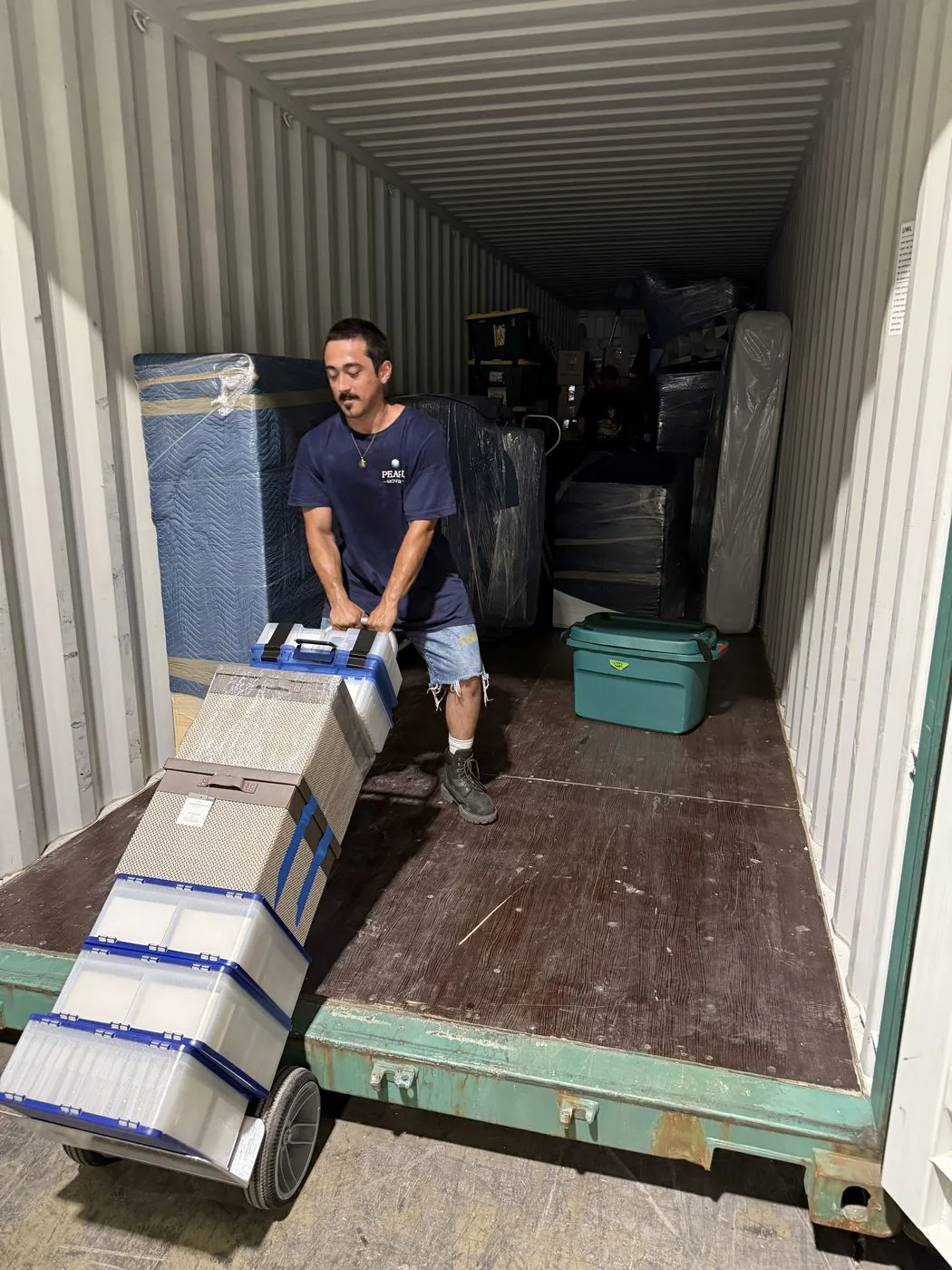
Short moves are where the do-it-yourself plan is most tempting, and where it fails most predictably. The reasoning is that a few friends and a weekend can handle a move that is "just across the street." The reality is that those friends still have to carry every piece of furniture, and the sofa still weighs what it weighs on a staircase. The movers-versus-truck comparison is honest about when a rental works. A ground-floor studio moving to another ground-floor studio on the same block is one of those cases. A two-bedroom on the third floor is not, regardless of how close the new place is.
The other failure is time. A short move planned as a half-day errand tends to run all day, and in a managed building that means overrunning the elevator window and dealing with the manager. Booking a crew for the day it actually takes avoids that.
If the move is small enough that it feels silly to hire a crew, the small-move guide covers what a two-person crew finishes in a morning. A short move often fits that shape.
A 7-item short-move checklist
- Plan it as a full move with a short drive, and book the hours the handling needs.
- Inside one building, confirm with the manager whether one elevator window covers both units, and get the answer in writing.
- Confirm the destination unit will be empty and ready before the crew starts.
- Settle where the truck stands for the whole job, in the complex or on the street, before the day.
- For a neighborhood move, arrange curb space at both addresses, with permits if the street needs them.
- Wrap and protect everything as if the drive were an hour long, because door frames do not care about distance.
- Keep the second trip in reserve for anything that turns up late.
Where Pearl Movers fits
A short move, planned like a real one
Pearl Movers quotes same-building and neighborhood moves from the same details as any local job: the two units or addresses, the elevator or stair route, where the truck can stand, and the inventory. Short moves are billed on the handling, so an accurate inventory and a confirmed elevator window are what keep the day tight.
See how local moving works, read the managed-building checklist, or request a quote with both unit numbers.
Common questions
Short-distance move FAQs
Do movers charge less for a move within the same building?
Local moves are billed on time, and the time comes from handling rather than driving. A same-building move removes the drive and keeps almost everything else, so it takes less time than a cross-town move but not dramatically less. Ask for an estimate built on the two units and the elevator route.
Do I need two elevator reservations to move within one building?
Often, yes. Buildings reserve the elevator per unit and per window, and a move between two units may need coverage for both. Ask the manager exactly what is required and whether one window covers both, and get the answer in writing before the date.
Is a truck necessary for a move across the street?
Usually. The truck is where the load is wrapped, organized, and protected, and a staged load is faster than carrying pieces one by one along a sidewalk. A ground-floor studio to another ground-floor studio might be walked; most other moves are quicker with the truck.
Can a short move be done in a morning?
A small one can. A studio or one-bedroom with straightforward access often fits a morning with a two-person crew. A larger apartment or anything involving stairs or an elevator reservation should be planned as a full day, because the handling does not shrink with the distance.
Planning references
Official and authoritative sources used
Permit, parking, construction, and access rules can change. Confirm current requirements with the responsible city, county, property manager, association, or service provider before move day.