
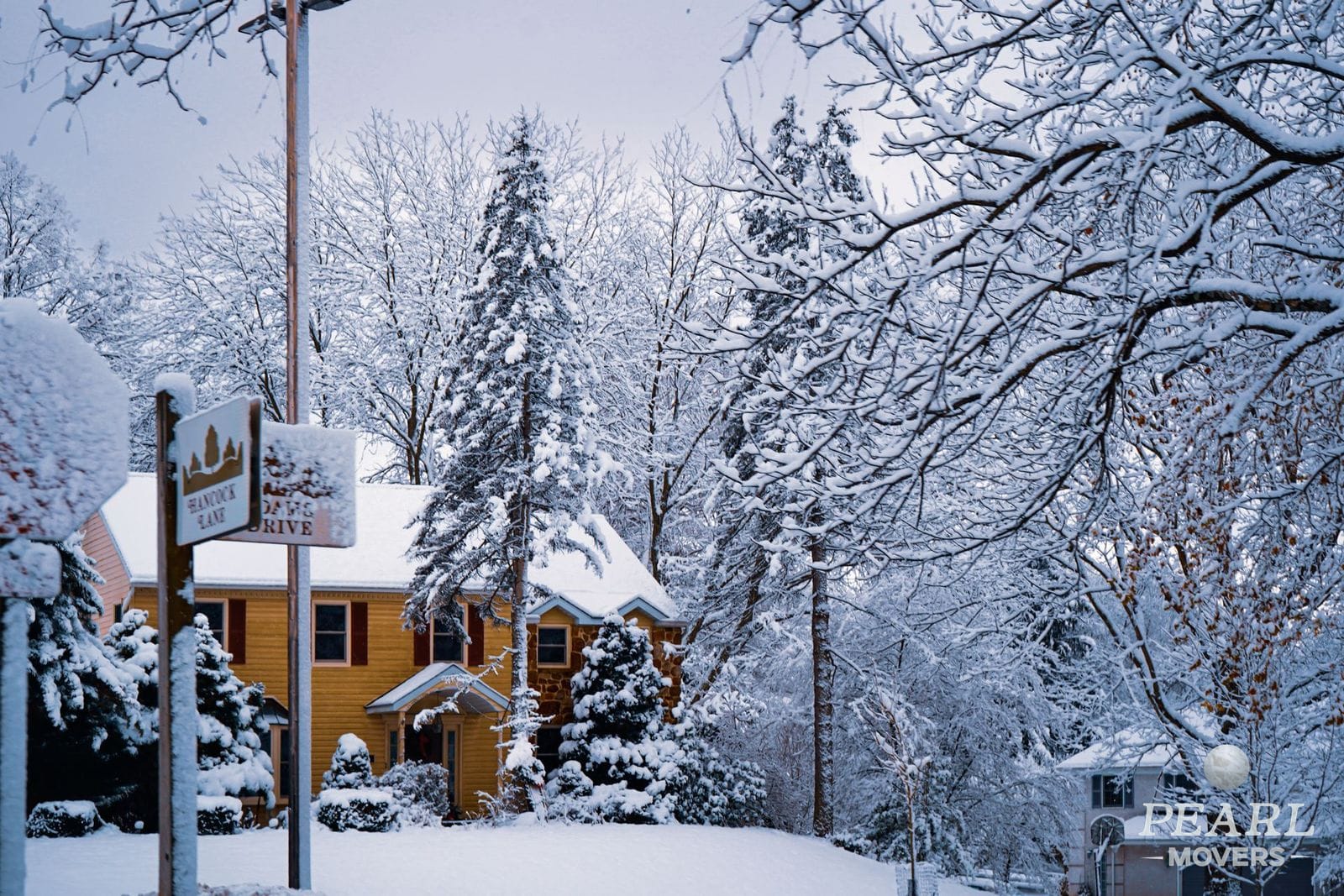
What Portland winter actually throws at a move
Set expectations honestly: a typical Portland winter day is gray, damp, and somewhere in the 40s. Crews work through that without drama. The planning problem is the small number of days that are genuinely different.
The signature Portland event is freezing rain. Cold east wind pours out of the Columbia River Gorge and holds surface temperatures below freezing while rain falls into it, and the result is a layer of glaze ice over everything: streets, sidewalks, steps, truck ramps, power lines. Snow happens some winters too, but snow is visible and drivable in a way glaze ice is not. A freeze event can also arrive without precipitation at all, leaving black ice on shaded pavement while the roads look merely wet.
The second constant is darkness. Midwinter days are short, and the useful outdoor light is gone by late afternoon. That does not stop a move, but it compresses one, and it punishes late starts hardest.
Everything else about winter moving is ordinary moving. If your date is still flexible, the best time to move in Portland guide weighs the seasons against each other; this article assumes winter is when the move is happening.
Ice and freeze events: the real schedule risk
Rain rarely stops a move. Ice usually does, because it removes safe footing and safe driving at the same time. A loaded dolly on a glazed driveway, a ramp with invisible frost, a hillside street that a heavy truck cannot safely descend: any one of these can make a site unworkable even when the forecast headline sounds minor.
Two habits keep an ice event from surprising you:
- Watch the point forecast, not the app icon. The National Weather Service Portland office issues watches and warnings for freezing rain and winter weather days ahead, and its forecast discussions explain how confident the forecasters actually are. Check the forecast for both addresses; conditions near the Gorge, in the West Hills, and at higher elevations can differ sharply from downtown.
- Check the roads the truck will use. ODOT TripCheck shows chain requirements, closures, and live camera views. A move between two fine driveways still fails if the route between them is iced.
As a general practice, moving companies make weather calls close to the day, based on actual conditions rather than the forecast alone, and they weigh crew safety, truck access, and the surfaces at both properties. Ask any company you book how that decision works and when you would hear about a change. The useful answer is a process, not a promise.
Plan a backup date, not just a date
The single most valuable winter planning move costs nothing: arrange your surrounding commitments so the move could slide a day or two without a crisis. That means a lease or closing with a little slack, utilities turned on at the new address a couple of days ahead of the move rather than on the day, and no hard appointment the following morning that depends on being unpacked.
Talk through the backup explicitly when booking. Useful questions: If ice makes the date unworkable, how is rescheduling handled? How late can the call be made? What does availability usually look like on the following days? Winter schedules generally carry more open dates than summer ones, which makes sliding a move far more realistic in January than it would be in August.
If the household itself has no slack, the fallback is compression rather than postponement. The last-minute moving plan covers how to organize a move on a short clock, and the same sequence applies when a freeze eats the original date and the replacement date arrives fast.
Work with the daylight you have
A winter move should be front-loaded. Book the earliest start available, and spend the shrinking light where it matters most: the outdoor work. Loading and unloading are the tasks that get harder in the dark; unpacking boxes indoors at 7 pm is fine.
A few scheduling habits help:
- Finish all packing the day before. A morning spent taping boxes is daylight lost from the carry.
- Decide room placement at the destination in advance and label boxes by floor and room, so unloading never pauses while an item waits on the ramp.
- Test the exterior lights at both addresses before move day, and stage a couple of work lights or headlamps in the car, not on the truck.
- If the elevator or a reserved parking window is part of the day, book the earliest window, not the convenient one.
Cold itself deserves one paragraph of respect. Keep a kettle, cups, and something warm to drink accessible rather than packed, leave the heat running at the origin until the door closes for the last time, and confirm the destination's heat works a day or two ahead. Some items also mind the cold more than people do: houseplants, aerosols, and some electronics should ride in the car rather than sitting in an unheated truck box, and screens are happier acclimating indoors before being powered on.
Walkways, steps, and the carrying path
The household owns the ground the crew will walk on. As a general practice, crews assess surfaces when they arrive and will not carry loads across footing they judge unsafe, so the walkway work you do the night before directly decides how smoothly the morning goes.
Walk the full path from the front door to where the truck will park, at both addresses if you can, and treat it as one continuous surface:
- Clear leaves, moss, and debris first; all three turn slick when frosted.
- Apply de-icer or sand the evening before a freeze, then again in the morning. Morning-only treatment misses the overnight glaze.
- Watch the melt. Water that runs off a treated step and refreezes at the bottom recreates the hazard a few feet downhill.
- Give shaded and north-facing sections extra attention. They hold ice hours or days after sunlit pavement clears.
- Keep handrails clear and dry, and leave porch and path lights on for early-morning arrivals.
Street trees and downspouts deserve a glance too: a downspout that discharges across the front walk is an ice machine in a freeze. Redirect it for the week if you can. For city-maintained streets and general winter travel information, the Portland Bureau of Transportation publishes routes and winter weather updates, which is worth checking if your block is steep or rarely plowed.
Winter move checklist for the final 72 hours
- Check the point forecast for both addresses and the TripCheck view of the route.
- Reconfirm the move window with the company and how a weather call would reach you.
- Confirm heat, power, and working exterior lights at the destination.
- Finish packing, label boxes by floor and room, and set aside a warm layer, gloves, and a change of dry clothes per person.
- Buy de-icer or sand and treat the full carrying path the evening before.
- Move plants, aerosols, and cold-sensitive electronics to the car-ride list.
- Re-treat walkways at first light and check shaded steps by hand before the crew arrives.
The quiet advantage of a winter move
Winter movers get something summer movers rarely do: choice. Demand for moving services generally drops outside the summer peak, so date flexibility, preferred start times, and rescheduling room all come easier between November and March. For a household that can hold a backup date and start early, the season's risks reduce to a forecast habit and a bag of de-icer.
The move itself runs like any other. Prepare the path, protect the daylight, and let the weather decide only what it truly must.
Where Pearl Movers fits
Book the date and the backup in one conversation
When you request a winter-date quote, include the addresses, the target date, and how much flexibility surrounds it. Pearl Movers can review the request against the route and access at both ends and talk through how a weather change on that date would be handled. Ask directly about start times and rescheduling so the plan is set before the forecast matters.
Review local moving information or request a quote with your target date and backup window.
Common questions
Winter moving FAQs
Do movers work during Portland winter?
Winter is a normal working season for moving companies, and most cold or wet days proceed without issue. The exceptions are ice and unsafe surfaces. Whether a specific move proceeds depends on the actual conditions at both addresses and on the roads between them, so review the day with the company rather than assuming either way.
What happens if an ice storm hits my moving date?
Ice generally stops a move where rain does not, because trucks, ramps, and walkways all become hazardous at once. Ask the moving company how weather rescheduling works when you book, watch the forecast from about 72 hours out, and hold a backup window a day or two later so a freeze delays the move instead of derailing it.
How do I keep walkways safe for a winter move?
Clear the full carrying path before the crew arrives, not just the front steps. Treat frost and ice with de-icer or sand the evening before and again in the morning, keep meltwater from refreezing across the path, and leave exterior lights on. North-facing steps and shaded concrete hold ice long after the rest of the block has thawed.
Is winter a good time to move in Portland?
It can be. Demand for moving services is generally lower outside summer, which often means more choice of dates. The tradeoffs are shorter daylight and the chance of a freeze, and both are manageable: start early in the day and keep a backup date. A flexible winter mover often books the exact day they want.
Local planning references
Official and authoritative sources used
Forecasts, road conditions, and winter service routes change quickly. Check current conditions with these sources and confirm plans with the moving company and property contacts close to the day.