
Beaverton's neighborhoods move differently
Beaverton is not one access pattern. After enough moves here, the neighborhoods sort themselves into three rough groups, and each group changes where the truck stands and how far the crew carries.
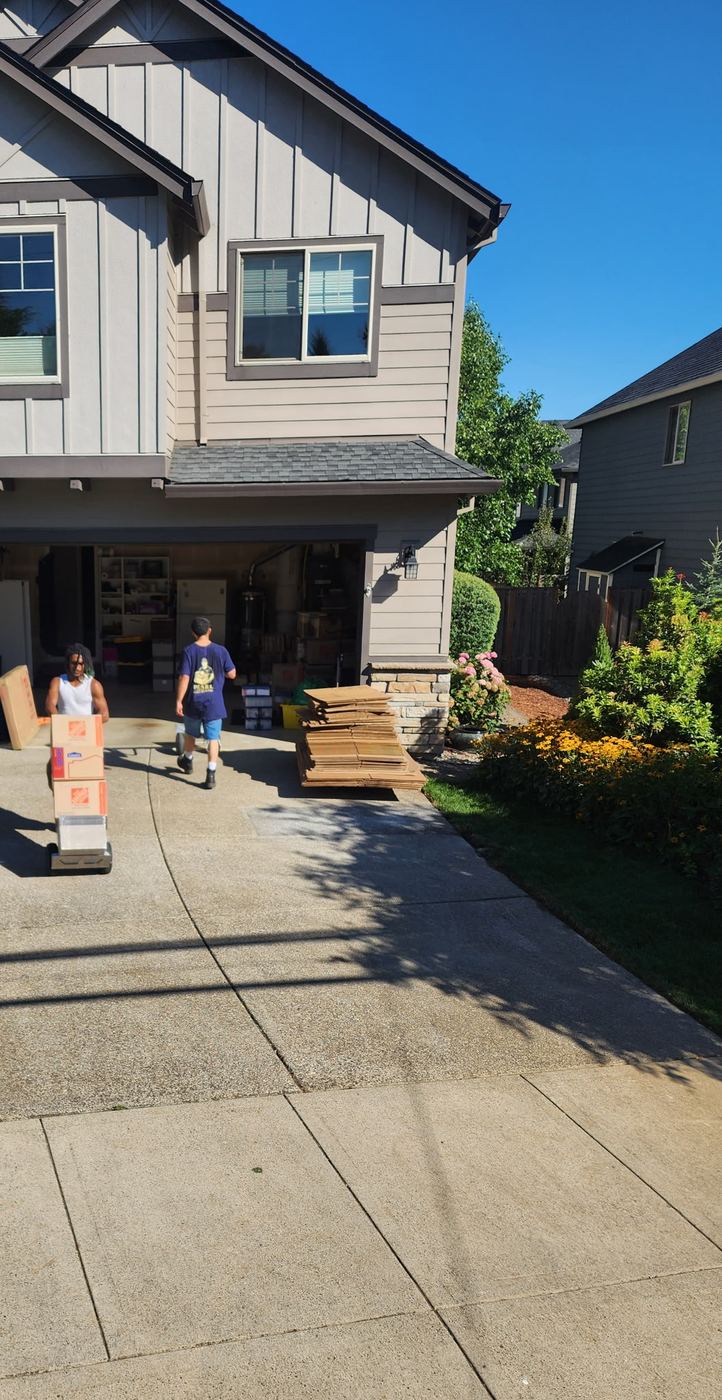
The west-side family subdivisions around Sexton Mountain, Cooper Mountain, and Murray Hill mostly run on driveways. Homes sit on cul-de-sacs and curving residential streets, garages face the road, and the practical question is whether the driveway itself can take the truck or whether the vehicle stays at the curb while everything rolls up the slope. Many of these subdivisions also have HOAs, and some of the Cooper Mountain area sits in unincorporated Washington County rather than inside city limits, which matters when you are confirming whose rules apply.
Older central Beaverton and the Cedar Hills blocks are a different job. Streets are narrower, driveways are shorter or shared, and the truck often ends up on the street among parked cars. The carry is usually longer than the owner expects, because the nearest legal position is not always in front of the house.
Then there are the newer townhome rows, where a shared drive feeds a line of garage-first layouts. The garage is the main entrance for furniture, the shared drive cannot be blocked for long, and the association usually has something to say about both.
None of these patterns is a problem. They are just different plans, and the plan should be settled before move day, not discovered on it. The Beaverton movers page covers how we approach each one.
Timing around schools and traffic
Family moves in Beaverton cluster hard around the school year. Most households want the move done in summer, or failing that, over a school break, so the kids start and finish a school year in one place. That is sensible. It also means everyone is competing for the same window. Check the Beaverton School District calendar for the actual break dates in the year you are moving, then work backwards.
Summer weekends book earliest. If the move must land on a Saturday between the last day of school and the first day back, that date should be locked in as soon as it is known. Families with weekday flexibility have an easier time, and often a calmer move, because the crew is not working the busiest day of the week.
Time of day matters too. Beaverton's traffic has sharp peak windows: Highway 217 through the middle of the city, Canyon Road heading toward Portland, and the Highway 26 interchanges on the north side all congest in predictable bands. A morning start puts the loading hours before the afternoon build-up and the drive between addresses in the midday lull. On the day itself, TripCheck shows live conditions if the route crosses any of those corridors.
Driveway, street, and HOA access
A driveway position needs measuring, not assuming. Three things decide whether it works. The slope, because a steep Sexton Mountain driveway changes how a loaded dolly behaves. The overhead clearance, because a tall truck does not fit under every basketball hoop, tree limb, or eave that a family SUV clears daily. And the walk from where the truck can actually stand to the front door, which is the number that sets how long the load takes.
If the truck has to work from the street, the position must respect the neighborhood's rules. Do not assume anything here transfers from Portland; anything involving public right of way in Beaverton should be confirmed with the City of Beaverton for the specific street, because Portland's permit process does not apply on this side of the West Hills.
HOAs and shared drives add a third layer. Some associations have written rules about where service vehicles may stand, what hours work is allowed, and how shared drives may be used. Some have none. The only way to know is to ask the association in advance, in writing, and to keep the answer with the move paperwork. A five-minute email in July prevents an awkward conversation with a board member in the driveway in August.

The family-home inventory problem
Here is the pattern I see most in Beaverton family homes: the owner walks the living room, the bedrooms, and the kitchen, builds an inventory, and gets a quote. Then move day arrives and the garage turns out to hold a second household. Shelving, holiday storage, camping gear, bikes, a chest freezer, the boxes from the last move that never got opened.
Garages understate every quote. So do attics, bonus rooms over the garage, playsets in the backyard, and the storage benches and window seats that quietly hold more than a dresser. When you build the inventory, walk the whole property, including the spaces you stopped seeing years ago, and count what is actually there.
This is also the moment to decide what is not making the trip. A family home sheds a surprising amount once someone forces the question, and everything that leaves before the move is volume nobody pays to carry. The declutter before moving checklist is built for exactly this pass.
Finally, label boxes to the rooms of the new home, not the old one. When the crew can read a destination on every box, the kids' rooms land first and intact, which pays off the same evening.
Making move week calmer for kids
The order of packing matters more for children than for anyone else in the house. Pack their rooms last, so home stays recognizable as long as possible, and unpack them first, so the new house has a finished corner on night one. A child who wakes up in a made bed with familiar things on the shelf treats the move as an adventure. A child who wakes up in a room of boxes does not.
Keep the school supplies, comfort items, and anything with a bedtime job in the family vehicle, not on the truck. The truck's timeline and a seven-year-old's timeline are not the same, and the small stuff should never be waiting on the big stuff.
Plan the first night before the truck arrives, not after. Meals, medications, chargers, a shower kit, one box of kitchen basics. The first-night box checklist covers the full list; the point is that it rides with you and gets decided while the house is still calm.
A 7-item Beaverton move checklist
- Check the Beaverton School District calendar and pick the move window before picking the date.
- Photograph the driveway, the street, and the walk to the door at both addresses.
- Ask the HOA or association, in writing, about truck position, hours, and shared-drive rules.
- Confirm anything involving public street space with the City of Beaverton for the exact address.
- Walk the full property for the inventory: garage, attic, bonus room, backyard, storage benches.
- Declutter first, then label every box to a room in the new home.
- Load the first-night box and the kids' essentials into the family vehicle, not the truck.
Where Pearl Movers fits
Turn the plan into a clear moving request
Pearl Movers quotes Beaverton requests from both addresses, the date, the full-property inventory, and driveway or street photos. The families who send those four things up front get numbers that hold, because the quote describes the house that actually exists. Anything the HOA or the city said in writing belongs in the same packet.
Start with the Beaverton moving page, read about local moving if the destination is elsewhere in the metro, or request a quote with the photos and inventory attached.
Common questions
Beaverton moving FAQs
When should a Beaverton family book movers for a summer move?
As early as the date is known. Summer concentrates family demand because most households in the Beaverton School District plan around the school calendar, and weekend dates in that window are requested first. Booking early also leaves time to photograph access, confirm HOA rules, and build a complete inventory before the quote.
Do Beaverton HOAs have rules about moving trucks?
Some do. Rules vary by association and can cover where a truck may stand, shared-drive use, and hours. Ask the association in writing before move day rather than assuming the neighborhood allows what the last one did, and share the written answer with the mover.
Can a moving truck park on my Beaverton street?
It depends on the street and the city's rules. Confirm anything involving public right of way with the City of Beaverton rather than assuming Portland's process applies. In many Beaverton neighborhoods a measured driveway is often the simpler position.
What makes family-home quotes change in Beaverton?
The usual causes are inventory that grew after the estimate, especially garage, attic, and bonus-room contents, and access that turned out harder than described, such as a truck position farther from the door than planned. A full-property walkthrough and honest photos of the driveway and street prevent most of it.
What is the best time of day to move in Beaverton?
A morning start usually works best. Loading happens before afternoon congestion builds on Highway 217, Canyon Road, and the Highway 26 interchanges, and the drive between addresses lands midday instead of in the peak windows. Check TripCheck for live conditions on the day.
Local planning references
Official and authoritative sources used
Permit, parking, construction, and access rules can change. Confirm current requirements with the responsible city, county, property manager, association, or service provider before move day.