
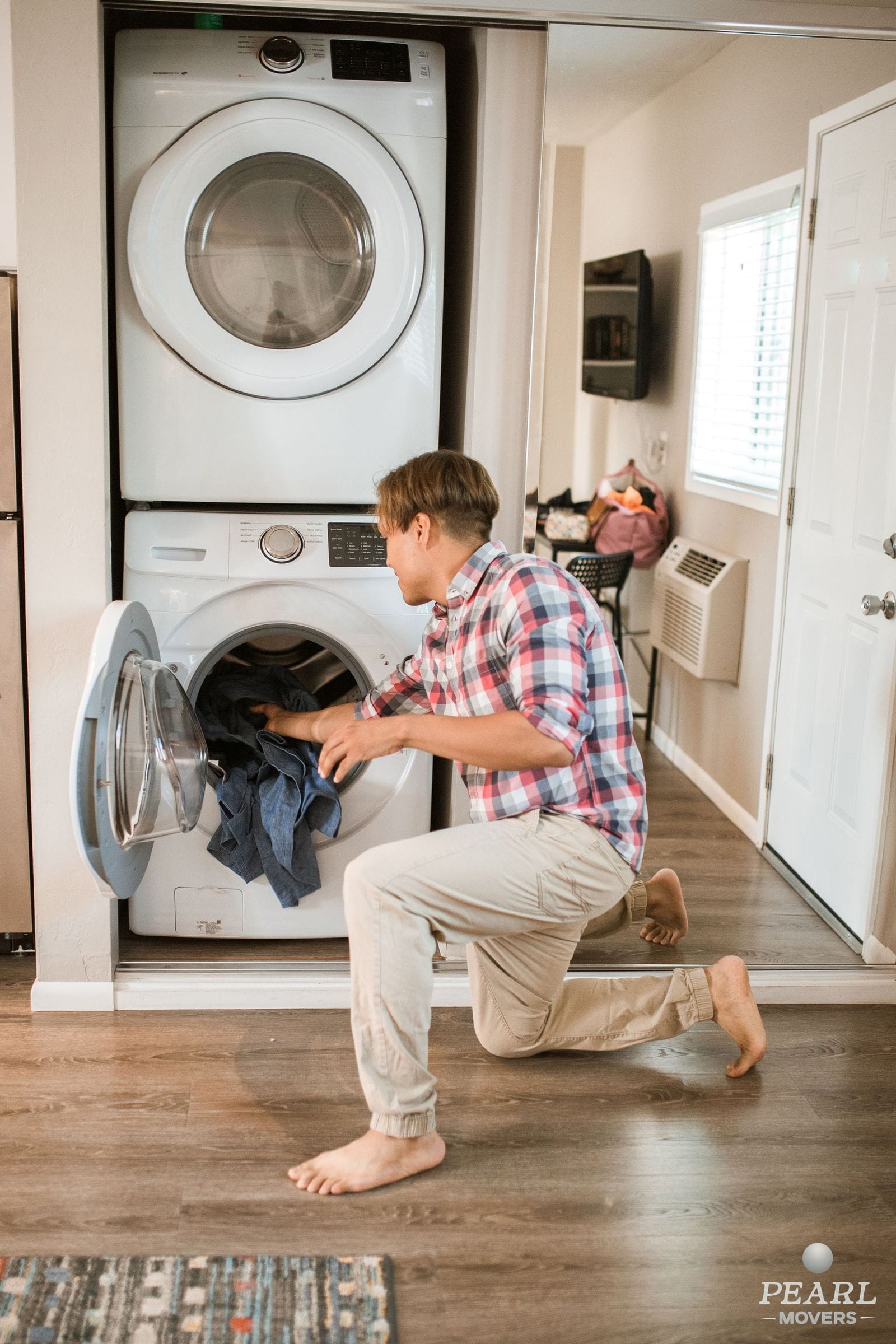
Why appliances need their own plan
A packed box is ready whenever you close it. An appliance is different. It holds water, it may sit on a gas line, and its own weight can damage floors or the machine itself if it moves before it is ready. The preparation cannot be compressed into the morning of the move because two of the steps, defrosting and drying, run on their own clock.
There is also a quoting benefit to sorting this out early. When a moving company knows the washer will be disconnected, the fridge will be empty and dry, and the gas range will already be capped, it can plan the crew and the truck around straightforward carries instead of building in time for surprises. Unprepared appliances are one of the most common reasons a move runs past its estimate.
Portland-area homes add a wrinkle worth checking: many older houses route laundry hookups into basements or tight closets. Measure the door and stair path for each machine before move day, and flag any tight turn in the notes you send with your quote request.
Washers and dryers: drain, dry, lock
Run the last load of laundry two days out. That leaves time for the drum and hoses to dry.
For the washer:
- Shut both water supply valves at the wall.
- Disconnect the supply hoses and drain them into a bucket. Cold first, then hot.
- Pull the drain hose from the standpipe and let it empty completely.
- Leave the door or lid open overnight so the drum dries out.
- Install the shipping bolts if the machine is a front-loader. They thread into the back panel and lock the suspended drum so it cannot slam around in transit. The manual shows the locations, and replacement bolts are sold by part number if the originals are long gone.
- Bag the hoses, bolts' wrenches, and any removed parts, label the bag, and tape it inside the drum or to the top of the machine.
An electric dryer is simpler: unplug it, detach the vent duct, and sweep the lint out of the duct opening. A flexible foil duct usually is not worth moving; they crush easily and cost little to replace. If the dryer runs on gas, stop here and read the gas section below before touching anything.
Refrigerators and freezers: start a day early
The refrigerator is the appliance most often prepared too late. Empty it, unplug it, and prop the doors open at least 24 hours before loading. A freezer carrying real ice buildup can need 48 hours. Lay towels under the front edge to catch meltwater, and pull the drip pan if the model has one.
Once the interior is at room temperature, wipe it fully dry and leave the doors open until the crew is ready for it. A closed, damp refrigerator grows mildew fast, and the smell is hard to remove once it sets in. Some households tape a sock filled with baking soda inside for the trip.
Two more details before it rolls out the door. First, remove the glass shelves and crisper drawers, or at minimum tape them so they cannot shift. Second, if the fridge has an ice maker or water dispenser, shut off the supply valve and disconnect the water line, then let the line drain. That line is plumbing, so if you are not comfortable with it, have it handled by a professional along with any other hookup work.
After the move, most manufacturers recommend letting a refrigerator stand upright for several hours before plugging it in so the compressor oil can settle. Check the manual for the model's specific guidance.
Gas appliances: book a licensed pro
A gas dryer, range, or cooktop needs a licensed professional to disconnect it and cap the line, and this appointment belongs on the calendar before move day, not on it. Capping a live gas line is safety work. It is not a job for the household, and it is not something to expect from a moving crew.
Schedule the disconnect for the day before loading so the appliance is free-standing when the crew arrives. At the destination, plan a second appointment for reconnection, and until it happens the appliance simply sits in place. Guidance from the Federal Motor Carrier Safety Administration's Protect Your Move program encourages households to sort out exactly this kind of scope question in writing before move day, and utility connections are one of the items it flags.
The same logic covers hard-wired appliances. A wall oven or a cooktop wired directly into a circuit needs an electrician to disconnect it. If you are unsure whether a unit is plugged in or hard-wired, pull it forward enough to look, or ask when you book the disconnect.
What moving crews handle, and what they do not
As a general industry practice, moving crews move appliances: they wrap them, protect the floors along the path, and load them so they ride securely. Plumbing, gas, and electrical work sits outside that scope. Most companies ask that every appliance be disconnected, drained, and free-standing before arrival, and some will decline to move a unit that is still connected.
The boundary exists for licensing and safety reasons rather than convenience, and it is worth confirming in plain terms when you book: ask what condition each appliance needs to be in when the crew arrives, and whether the company has any policy about built-in units. The answer varies by company, so get it for your specific move rather than assuming.
A related question is which items cannot go on the truck at all. Propane tanks and other fuels fall in that category no matter how well they are packed; the what movers won't move guide covers the full list.
Appliance prep checklist for the final 48 hours
- Confirm the licensed disconnect appointment for any gas or hard-wired appliance.
- Run the final laundry load, then leave the washer and dryer open to dry.
- Empty the refrigerator and freezer, unplug them, and prop the doors open with towels underneath.
- Shut the washer's supply valves, disconnect and drain all hoses, and install the front-loader shipping bolts.
- Shut off and drain the ice maker line if the fridge has one.
- Wipe every interior dry, remove or tape loose shelves and drawers, and tape doors shut only when each unit is fully dry.
- Bag and label all hoses, cords, bolts, and small parts, and tape each bag to its machine.
Small appliances and the rest of the kitchen
Countertop appliances follow box rules, not appliance rules. The original box with its foam is the best container if it survived in a closet somewhere. Otherwise wrap the item, fill the voids in a sturdy box, and keep the weight low enough to carry comfortably. Drain anything that holds water, coffee makers especially, and tape small removable parts to the body of the machine or bag them inside the same box.
The kitchen around those appliances is its own project, with more fragile items per box than any other room. The kitchen packing guide covers dishes, glassware, and pantry sequencing. And if the whole kitchen is more than the household wants to take on, professional packing can cover it while you focus on the appliance appointments only you can schedule.
Oregon's moving regulator publishes general guidance for households hiring movers at the ODOT household goods moving page. It is worth a read before any Portland-area move, appliance-heavy or not.
Where Pearl Movers fits
Put the appliances in the quote from the start
When you request a Portland-area quote, list every full-size appliance, note which ones are gas or hard-wired, and mention any basement or tight-stair path. Pearl Movers can then review the request against the date, route, and access and tell you what condition each unit needs to be in when the crew arrives. Ask directly about anything you are unsure of rather than assuming a task is included.
Review local moving information or request a quote with your appliance list and photos of the path to each machine.
Common questions
Appliance moving FAQs
Do movers disconnect washers and dryers?
In general industry practice, moving crews carry and load appliances but do not perform plumbing, gas, or electrical work. Many companies ask that water lines, drain hoses, and power be disconnected before arrival. Confirm the scope for a specific move with the company before the date.
How long before moving should I defrost a refrigerator?
Start at least 24 hours before loading. A freezer with heavy ice buildup can need 48 hours to defrost and dry. The interior must be fully dry before the doors are closed for transport, or moisture can cause odor and mildew.
Who disconnects a gas dryer or gas range?
A licensed professional should disconnect and cap any gas appliance. This is not a task for the household or the moving crew. Schedule the appointment before move day so the appliance is free-standing and capped when loading begins.
Do front-load washers need transit bolts?
Most front-load washers use shipping bolts that lock the drum for transport, and moving one without them risks drum damage. Check the manual for the bolt locations. If the original bolts are gone, replacements are sold by part number for most models.
Local planning references
Official and authoritative sources used
Appliance handling and disconnection requirements vary by manufacturer, property, and company. Confirm the specifics with the appliance manual, the service professional, and the moving company before move day.